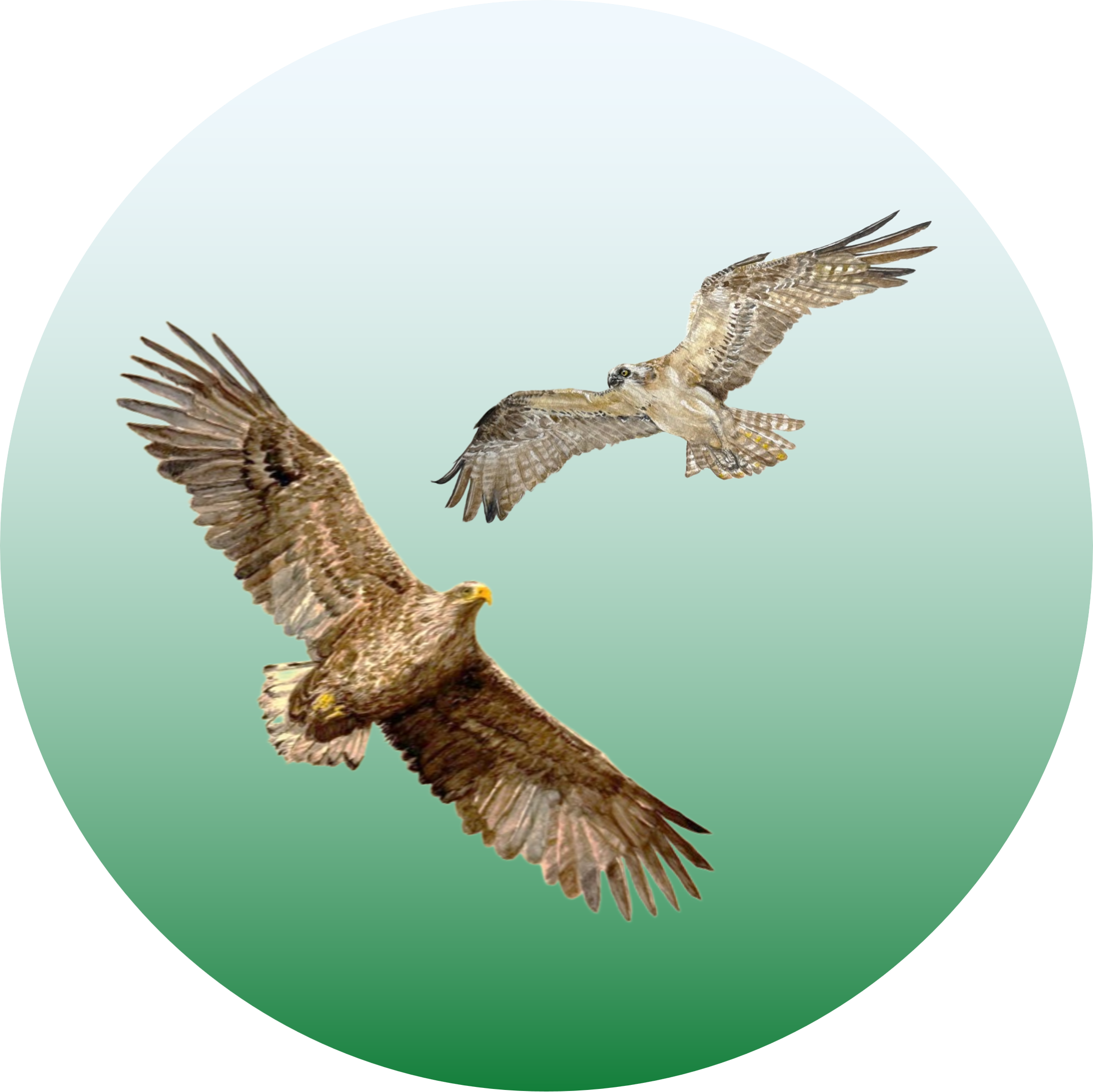
The return of white-tailed eagles to England has taken another step forward with the release of six young birds in Exmoor National Park, the first to be reintroduced here after they disappeared due to persecution over two hundred years ago.
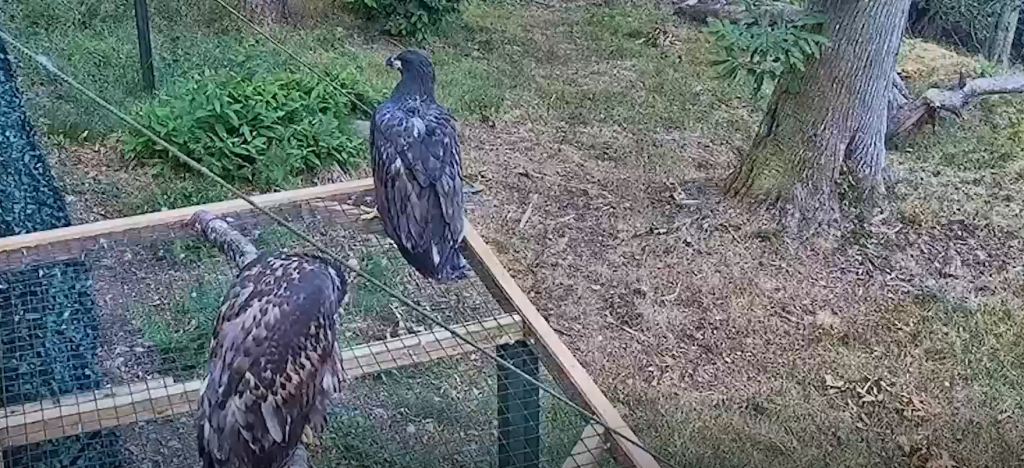
Two female White-tailed Eagles make their first explorations from release pens at Exmoor National Park
The releases are part of a project started in 2019 by The Roy Dennis Wildlife Foundation and Forestry England to restore this lost species, and the key role it plays in supporting biodiversity, to England. Since then, 45 white-tailed eagles have been released from the Isle of Wight. Several are now breeding and in 2023 the project celebrated the first white tailed eagle chick to be born in the wild in southern England since 1780.
The team are now working with Exmoor National Park Authority to release further White-tailed Eagles in a bid to boost the population and expand their breeding range into south west England. Up to 20 additional young birds will be released from this location over the next three years. The project will also continue to carry out releases from its base on the Isle of Wight.
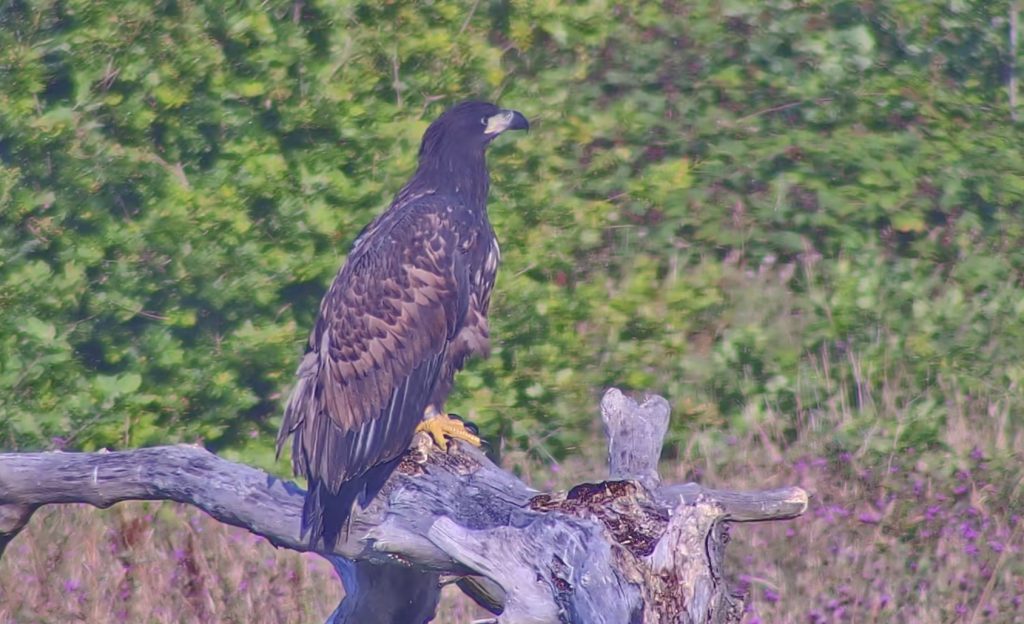
A young White-tailed Eagle after release on the Isle of Wight
Exmoor was chosen as an additional location after tracking data from the released birds showed the area had been frequently visited by several of them and provides suitable habitat. It is known that the species formerly bred along the Exmoor coastline, which continues to provide ideal foraging, including an abundance of fish, and breeding habitat for the birds.
Earlier this year, the six young birds were collected under a NatureScot licence from the wild in Scotland and brought to Exmoor. Here they have been cared for by a team of experts whilst becoming familiar with their new surroundings.
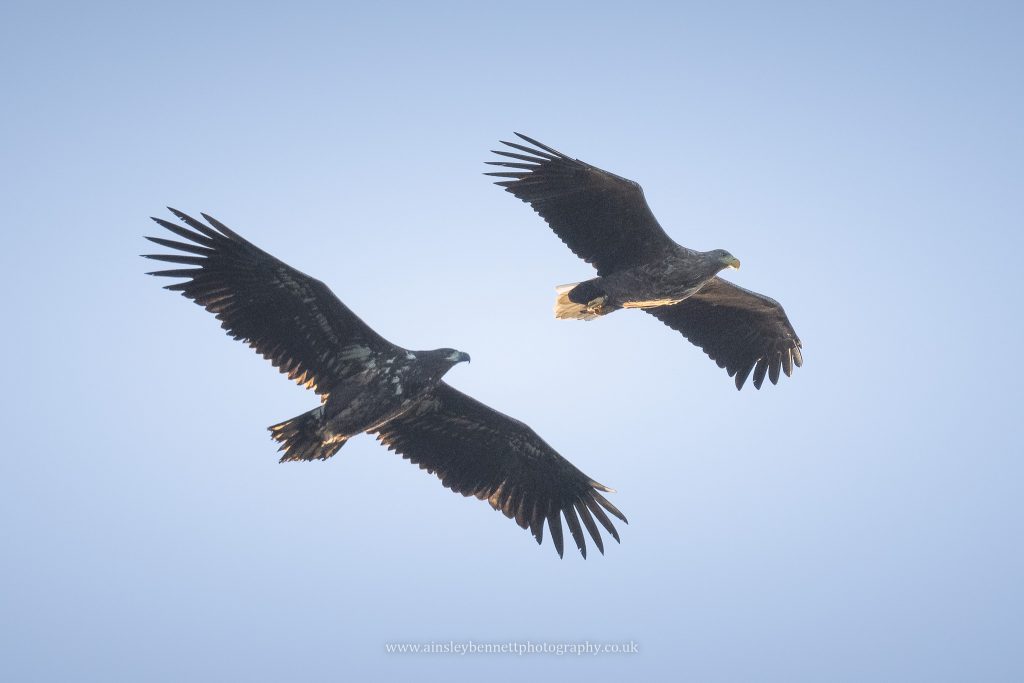
Satellite tags enable the project team to closely monitor the movements of released eagles (photo by Ainsley Bennet)
Before being released the birds were fitted with satellite trackers so their progress can be closely monitored by the project team. It is expected that the young eagles will travel widely across the UK and potentially into Europe before returning to the area to breed when they are four or five years old.
Zoe Smith from the Roy Dennis Wildlife Foundation said: “White-tailed eagles would have once been common natural sight across the south west of England. After so many years absent from this landscape it is a special moment to be returning them on Exmoor. We will closely monitor their progress as they explore and, in time, begin to settle across this region. Thank you to everyone in the local community who is working with us to support the return of these magnificent birds.”
Angela Eagle, Environment Secretary for Defra said: “Majestic white‑tailed eagles – a particular favourite of mine – are once again soaring above Exmoor and the Isle of Wight, reflecting this government’s commitment to reversing the decline of nature and protecting it for generations to come.
“We are investing £90 million into species recovery, marking the largest ever government investment to directly support threatened wildlife.”
Stephen Egerton-Read, Project Officer for Forestry England said: “It is incredible to be returning this once lost species back to England. Seven years into the project we can see just how well the eagles are settling along the south coast of England and the really positive reaction the public have to seeing them back.
“These additional releases on Exmoor will help to boost the population and expand their geographic range into the south west ensuring many more people can see these amazing birds and are inspired by seeing nature return in this way.”
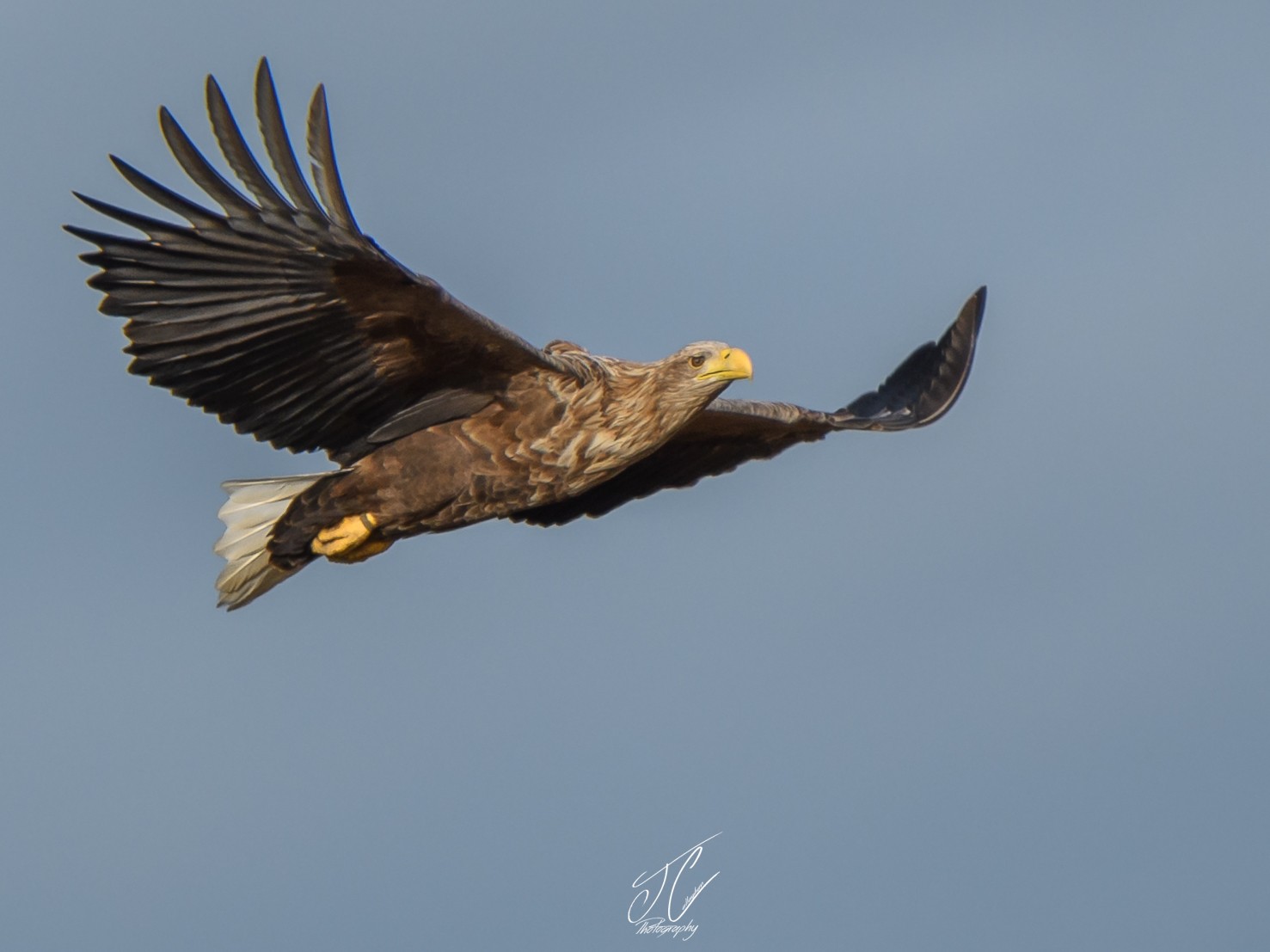
White-tailed Eagle (photo by JC Photography)
A comprehensive feasibility study and public surveys were conducted before reintroducing the birds and a steering group made up of local organisations and members of the community has met and is helping to guide the project.
Ali Hawkins, Senior Ecologist with Exmoor National Park Authority, said: “This is such an exciting moment for Exmoor and a real boost to biodiversity in the National Park, as white-tailed eagles play a crucial role in both marine and land-based ecosystems. We‘d like to thank all representatives taking part in the steering group and we will continue to work closely with the local community as the project progresses.”
The reintroduction of Britain’s largest bird of prey is being conducted under licence from Natural England, the Government’s wildlife licensing authority.
Leave a Reply