
Thoughts from the Wildfire Front – Roy Dennis OBE
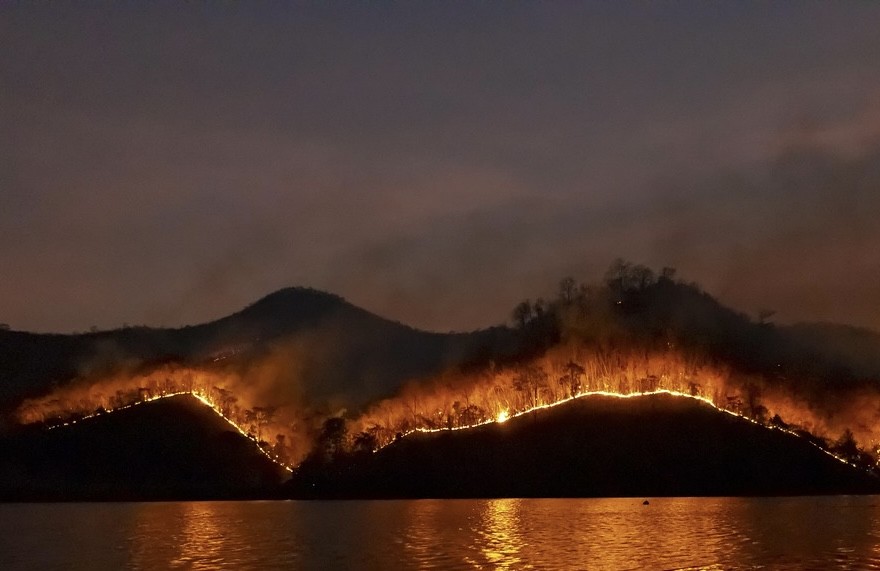
I fought my first forest fire, in 1960, or rather I helped to fight a wildfire that was raging in the Sluggan Forest of Glenmore in Strathspey. I remember it as a fast-moving fire, destroying tall plantations of Douglas firs and spruces as well as ancient Caledonian pine forest. Even now, over sixty years later, I can still see a few burnt blackened trunks of the ancient Caley pines. Hansard reported “The fire at Glenmore, Inverness, on 3rd June burnt about 300 acres of Forestry Commission plantations and a further 700 acres of privately-owned woodland and moorland. The cost of replacing the Commission plantations will be about £40,000”.
At the front using our fire brooms, it was hard dangerous work. The searing heat on our faces when it flared up, the constant smoke, sometimes in our lungs, the dust and the flying pieces of blazing embers, made one feel small in the face of catastrophe. We were there most of the evening and night, and finally the Northern Area Fire Brigade announced it was under control. I heard later that at one stage the fire roared through the canopy of the conifer trees above one of the fire engines and the crew had to reverse at high speed for safety. Brave firemen putting themselves at danger for the public good.
Our little team was finished at 4 am, exhausted but relieved as the fire was brought under control. It was a difficult change of pace from intense activity and danger at the fire front, shouting to our neighbours as a new bit of fire burst out, running out of danger and re-advancing. And then you’re on the way home, talking excitingly about the experience. I remember that night for a quite different experience; my boss was a retired RAF wing-commander who had just taken delivery of a brand-new Ford Cortina. On the empty straight road to Boat of Garten he put his foot down to reach 104 miles an hour. As a wartime pilot, for him it was like the intense exuberance of surviving after a dangerous mission.
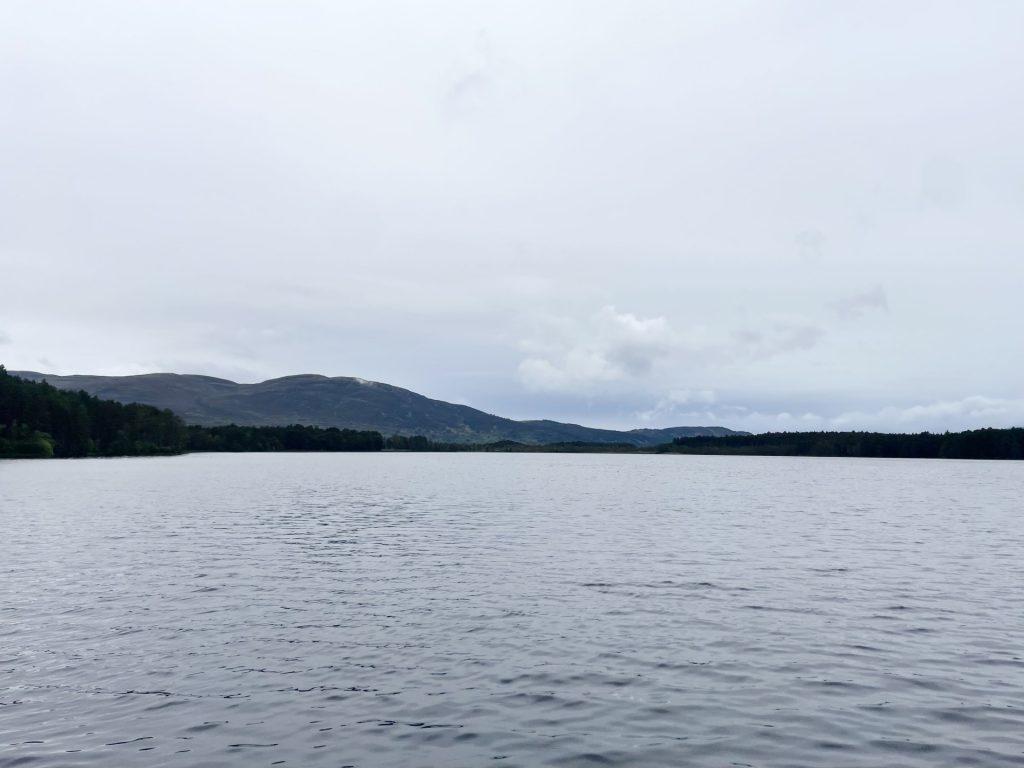
Above: Loch Garten photographed in 2026
Throughout my long life working for wildlife in the Scottish Highlands, moor burning was a frequent part of springtime. As soon as one keeper, had sent a smoke signal of ‘muir burn’, others joined in. There was no doubt it was contagious activity, not just because the conditions for burning the heather were right. I remember once or twice when I lived on the Black Isle and was watching evening smoke clouds over the mountains of Easter Ross, I would feel an itch and put a match to an annoying clump of broom growing in our garden. Whoosh – in no time my family would shout – put it out. I think there are fire raising genes in many of our DNAs. Looking back to those old days, I remember the old Highland saying that when a keeper’s or crofter’s son, born at Raigmore Hospital in Inverness, was heading home he was given a box of matches.
In the 1970s and 80s I saw too many fires out of control, and too often they were treated as a joke rather than a serious problem. Most that I was at were small blazes, but still exhausting beating out the flames with a wet hanky tied over my nose. Now we are increasingly in a totally different era of climate breakdown, caused by humans. Longer growth of vegetation due to milder winters, and the severe impacts of climate change causing hotter temperatures and longer droughts: all a recipe for dangerous and extensive wildfires.
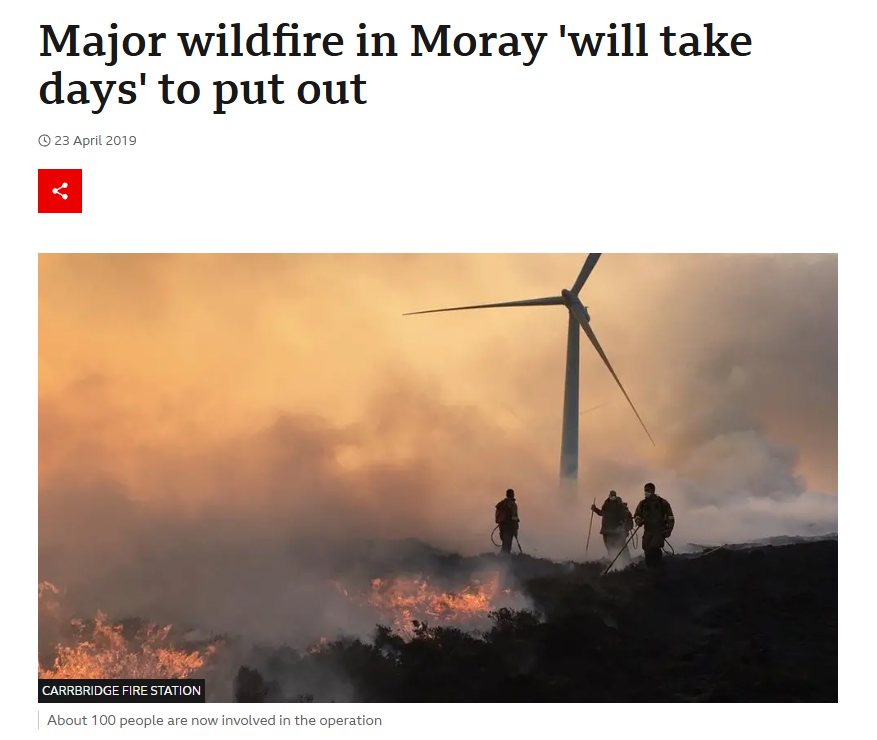
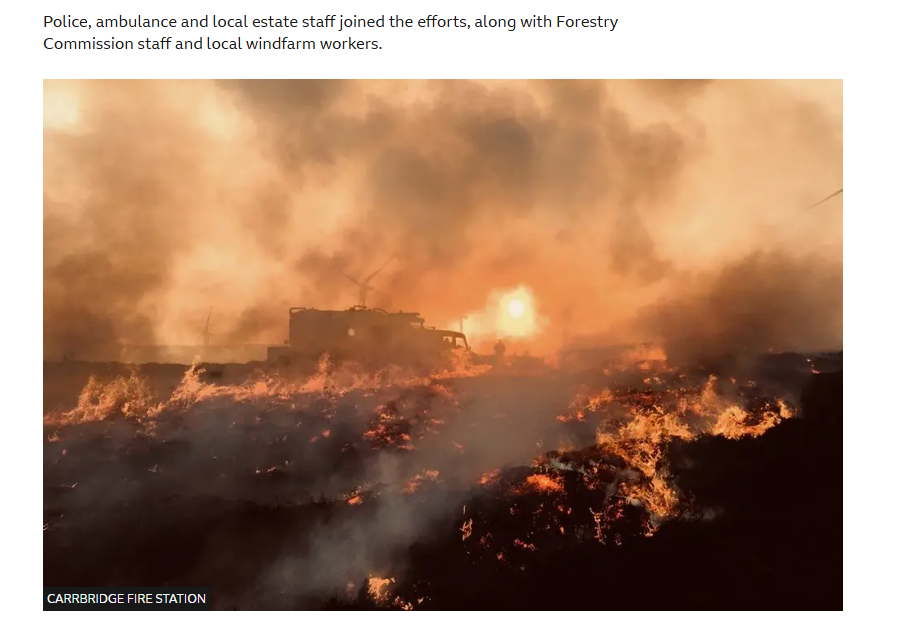
In 2019, an out-of-control muir burn came out of the peat, days later, and turned into a dangerous wildfire which destroyed 350,000 young trees as well as rich biodiversity, in the hills south of Forres where I live. For days the sun was blocked out by the massive smoke clouds. Last year the destructive Dava Moor fires created huge clouds of smoke blowing north over the towns and villages of Moray. One day driving on the A96, the smoke was thick above the River Findhorn and I did not get out of it until I was well east Elgin. A 19-mile front of smoke blocking out the sun to Moray residents, creating smoke inhalation and dropping micro-particles. These are dangerous to human health – it’s why the people in Southeast Asia, more used to smoke haze from forest fires than us, wear face masks for their health. Something no one seems to do here, yet the inhalation of smoky micro-particles is bad for human health, especially for the young and old. Even more so if it is peat that is burning as it generates more toxic smoke than vegetation fires because smouldering peat releases much higher levels of fine particles and toxic gases.
Below: BBC news headlines from the 2019 Moray Wildfire
That simple lack of understanding of the dangers of fire and smoke, instead of just thinking the problem is on the land that is being burnt, suggests that we, as a nation, have to become much more serious about the ignition and control of wildfire. Fire preparedness requires to encompass emergency planning, human health, capacity building, readiness as well as impacts on the Earth’s ecosystems and on public health and local economies.
Prevention
This spring, the Cairngorms National Park Authority erected notices warning people about the dangers of wildfires, banning the use of barbecues and outdoor fires, with on-the-spot fines of £500. I was pleased to see that initiative for it is so important to warn people about the dangers of starting fires. I see that as a start, but penalties need to be greater and cheap one-use barbecues should be removed from sale.
It’s also important to identify and prosecute those who start wildfires. In the immediacy, of fighting a fire, there is not enough effort put in to identifying how and who started the fire and getting evidence for prosecution, when appropriate. One of the Dava Moor fires was undoubtedly started by a couple of fishermen, with an out-of-control barbecue at a roadside loch. I phoned the police that morning to ask if they had requested dash cam evidence from motorists on that section of road, because it was highly likely that the car belonging to the fishermen, parked in the roadside layby, could have been identified from dash cam footage. I don’t think that was followed up because the immediate action was to fight the fire.
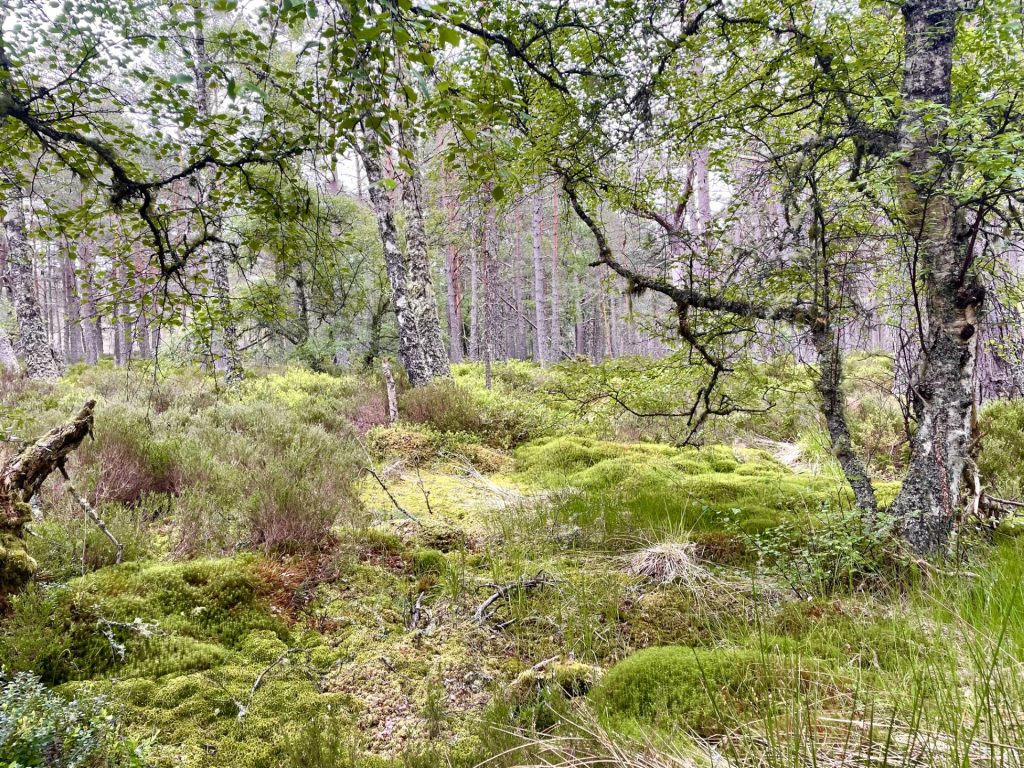
Below: Left: Healthy understory in the Abernethy Forest Nature reserve in the Caingorms National Park, Right: Guardian news article covering the devastating losses following wildfires in the Caingorms
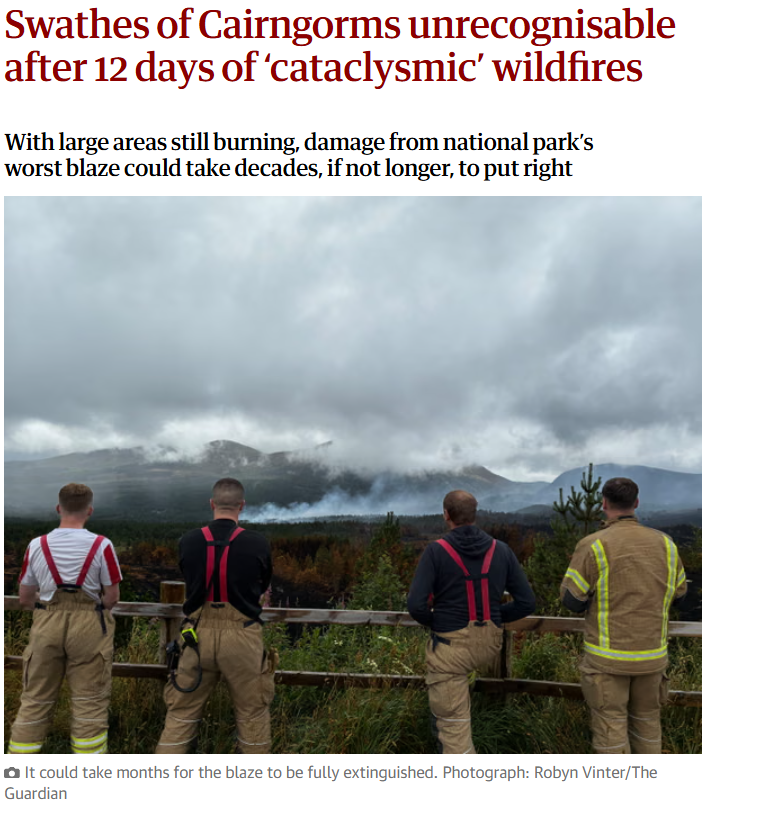
Forensic science for solving crimes has become ever more sophisticated. There is no doubt that the remains left at a campfire, and even the vegetation where people had been sitting, would contain human DNA for use in any prosecution. It’s important to recognise that starting wildfires is an ever serious crime. It should be mandatory that a couple of CID police officers attend wildfires to search for evidence to bring people to court.
Early detection is a prerequisite for wildfire control. But that is problematic now, because there are far fewer professional forest workers and estate staff on the ground than fifty years ago, but there are much larger numbers of tourists who pose the fire risk. In the 1970s, I remember climbing up the fire watchtower in Culbin Forest, to have a chat with the fire watchers who were on duty whenever dangerous fire conditions prevailed. This was dedicated work, by the Forestry Commission, which allowed for early detection of the first smoke rising from a potential wildfire. Successful wildfire prevention is incumbent on earliest possible action. In many countries worldwide, fire watchtowers are still recognised as important.
Did we abandon them in this country because of cost-cutting. If so, it was small change compared to the massive financial and economic costs of recent wildfires. It’s not just about the loss of timber; it’s about the dangers to and the cost of the brave firefighters, official and volunteers, and also the loss of biodiversity, threats to peoples’ houses and the massive loss of income to people involved in the tourist industry. I’m old enough to remember many times, when the authorities have said ‘we must never let it happen again’. In the present circumstances, I have no faith in that comment, and it’s not good enough for the politicians to say, for another time, after the next major wildfire – ‘we must never let it happen again’.
New technology will undoubtedly improve wildfire detection in the future. Already earth observation satellites are passing over Scotland and are capable of detecting active fires. My daughter, a tropical forest fire specialist in Southeast Asia, sent me sequential images of the progression of the Abernethy Forest fire. Although providing valuable sources of information, the present satellite systems are often unable to detect very small or newly ignited fires before they become established. This is a challenge which has led to the development of FireSat, an initiative led by the Earth Fire Alliance in partnership with Google Research and other organisations. FireSat is deploying a dedicated constellation of satellites designed to detect fires as small as approximately 5 × 5 metres and is designed to revisit every location on Earth approximately every 20 minutes with global operational capability expected in 2027. This should be a game changer for early-stage wildfire detection. Scotland should establish a small specialist fire monitoring unit, using this new system, dedicated to early fire detection.
Above: introducing the FireSat research and development initiative
Control
Fighting wildfires is a really difficult and dangerous task for the Scottish Fire and Rescue Service; despite sterling efforts with trained personnel and fire engines, wildfires are unpredictable and occur in places where their standard machines and equipment have difficulty of access. In fact, without the staff and more mobile machinery of gamekeepers, foresters, nature wardens and estate staff it would be far more difficult to extinguish wildfires. In my view, it’s again time to learn enhanced techniques from other countries.
Politically, big fires need to be declared emergencies much earlier. Looking at continental Europe, there is controversy about the lack and age of their fire-fighting planes. France has 12 Canadair amphibious fire-bombers, Spain has 14 and the EU 12; but they are old and not all are ready for use. New variants are being built, while the newer Dash fire-bombers are becoming available. This summer, the French retrofitted an Airbus A400M transport plane able to dump 22 tons of water or retardants on wildfires. Large helicopters, as used in other countries, can drop larger amounts of water on the fire than the presently used smaller ones in the UK. Intense aerial attack is essential and rapid intervention at the initial fire source must be the aim. RAF Typhoon aircraft at Lossiemouth are scrambled within minutes, 24/7, to check out suspicious aircraft entering UK airspace; why cannot fire-bomber aircraft be on 24/7 alert during high fire risk so the aerial response is immediate.
The UK should have a fleet of fire-bombing aircraft stationed around the country. The military should be brought in quicker with aircraft and special equipment. I cannot see why the fire-bomber fleet shouldn’t be under RAF control. The primary duty of the military is to protect the nation, defend its global interests, and maintain international peace. This is achieved by deterring enemies, securing the homeland, and supporting civil authorities. This doesn’t necessarily mean that threats only come from foreign forces, it could increasingly be from the threats to our way of life caused by climate and biodiversity breakdown, including uncontrollable wildfires. Fire-bombing technology is a rapidly growing market with a future that the UK should embrace in the most professional manner. It will be a increasing financial market place.
Ecological amelioration
Following recent wildfires, there’s been a backlash, from some, against ‘rewilding’ and ‘rewilders’, but that’s failing to recognise the ecological dangers that we are in due to past extractive land use as well as climate breakdown. We desperately need far more of our degraded lands and river watersheds to be reforested. UK has a disappointingly low percentage of woodland cover and for ecological restoration and to sequester carbon, we need forest cover to greatly increase.
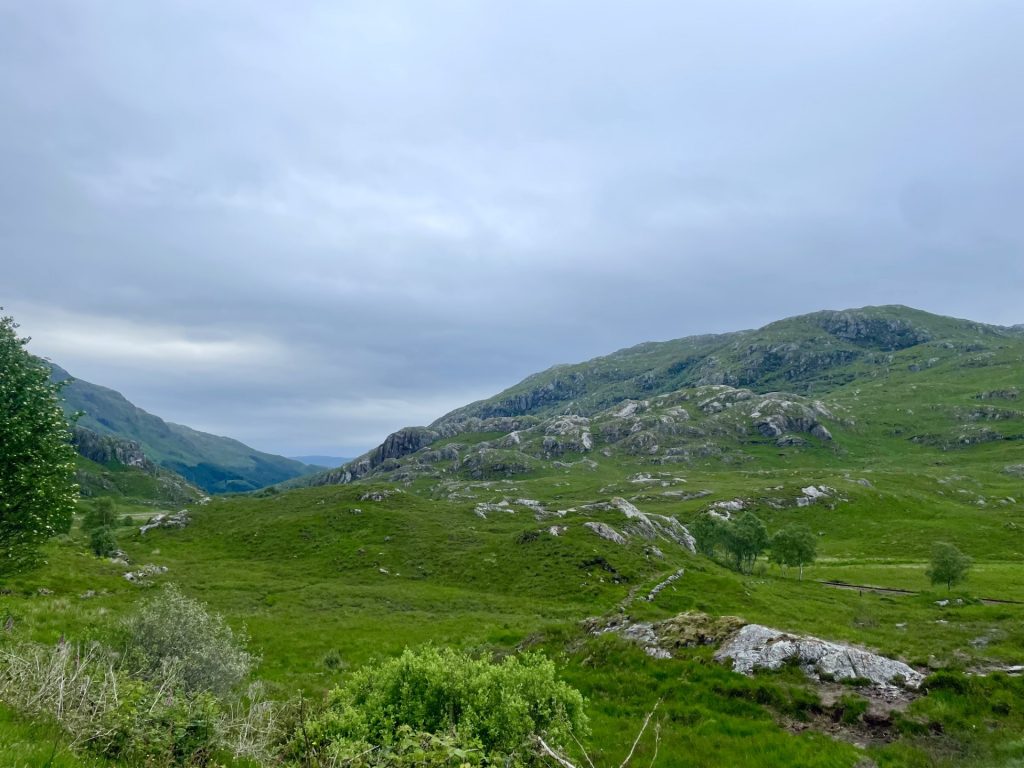
Below: Glenfinnan, Western Scotland
At the same time, tree planting and natural regeneration must be much more multi-purpose. Huge stands of conifers are unnatural as well as being major fire risks. The proportion of broadleaf trees in conifer forests must be increased, there was 30% or more in the original native pine woods, and future planting should be a mosaic, where deciduous trees act as effective fire breaks, as well as beneficial for biodiversity and tree health. This requires a major change in thinking. Due to human induced changes in our climate, wildfires are an increasing major threat and we must also rethink the risks in present woodlands. Near me in Moray, the man-made 7000 acre Culbin Forest stretches for nine miles between Forres and Nairn. It’s a conifer dominated landscape at risk from wildfires. In this era of uncertainty, it would be wise to create three or four wide south-to-north fire breaks. Initially bare ground, they should be planted with deciduous trees such as willows, birches, alders and rowans to reduce heather growth and act as fire breaks. There are other conifer dominant forests at similar risk.
In many woodlands, as well as moorlands, there is excessive growth of ground vegetation, especially heather and moss, caused by the removal of grazing animals and exacerbated by milder growing conditions. Since the last Ice Age, Scottish woodlands were grazed by large herbivores, importantly the extinct wild ox and subsequently by cattle, domesticated from the aurochs. In the last century, traditional cattle, including Highland cows, were progressively removed from woodlands, usually by bureaucracy. This has caused massive ecological damage to many parts of nature. Cattle grazing in woodlands is not only essential for biodiverse ecosystems, but also for reducing flammable material thus aiding fire prevention. The initial evidence from the Abernethy Forest wildfire is that the parts of the pinewood, with longest cattle grazing and greater sward change from heather to grassland plants prevented fire spread in that habitat. Many more nature cattle are needed to graze woodlands because many woods are now dysfunctional. Such enhanced management of woodlands would also increase rural employment – the very people to see and put out early fires. But all of this essential change will require redistribution of society’s wealth.
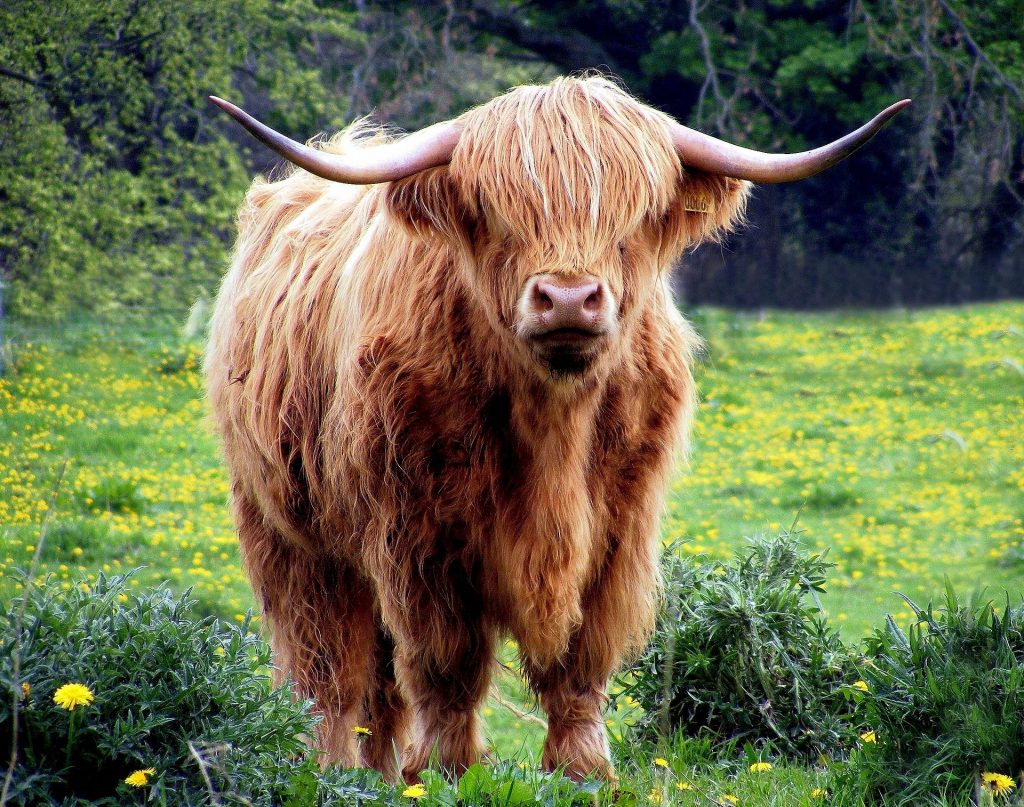
The Highland Cow and The Horse of The Woods – Appalled by the catastrophic decline of the capercaillie in Scotland author Roy Dennis argues a dysfunctional forest habitat is to blame and that Highland cattle can be the solution.
Recent big wildfires are a wake-up call. We are living through a period of profound environmental change, and society desperately needs decisive and forward-looking leadership. We must prepare for a future in which wildfires become more frequent and more severe, rather than simply reacting to each disaster as it comes along. No longer can we accept:- ‘we must never let it happen again’.
Leave a Reply