
White-tailed Eagle diet studies
In partnership with Forestry England, Cardiff University and Bournemouth University, we have undertaken extensive fieldwork to further understand the diet of translocated White-tailed Eagles in Southern England.
Image: Jacquie Leeming
Prey remains and pellets
Like many raptors, White-tailed Eagles produce pellets, which we can find and analyse at roost and nest sites.
Nest site cameras
Cameras installed at nest sites enable us to record every prey delivery during incubation and rearing phases.
Field observations
Our ornithologists and Forestry Englands project officers spend many hours monitoring Eagle hunting and feeding behaviour.
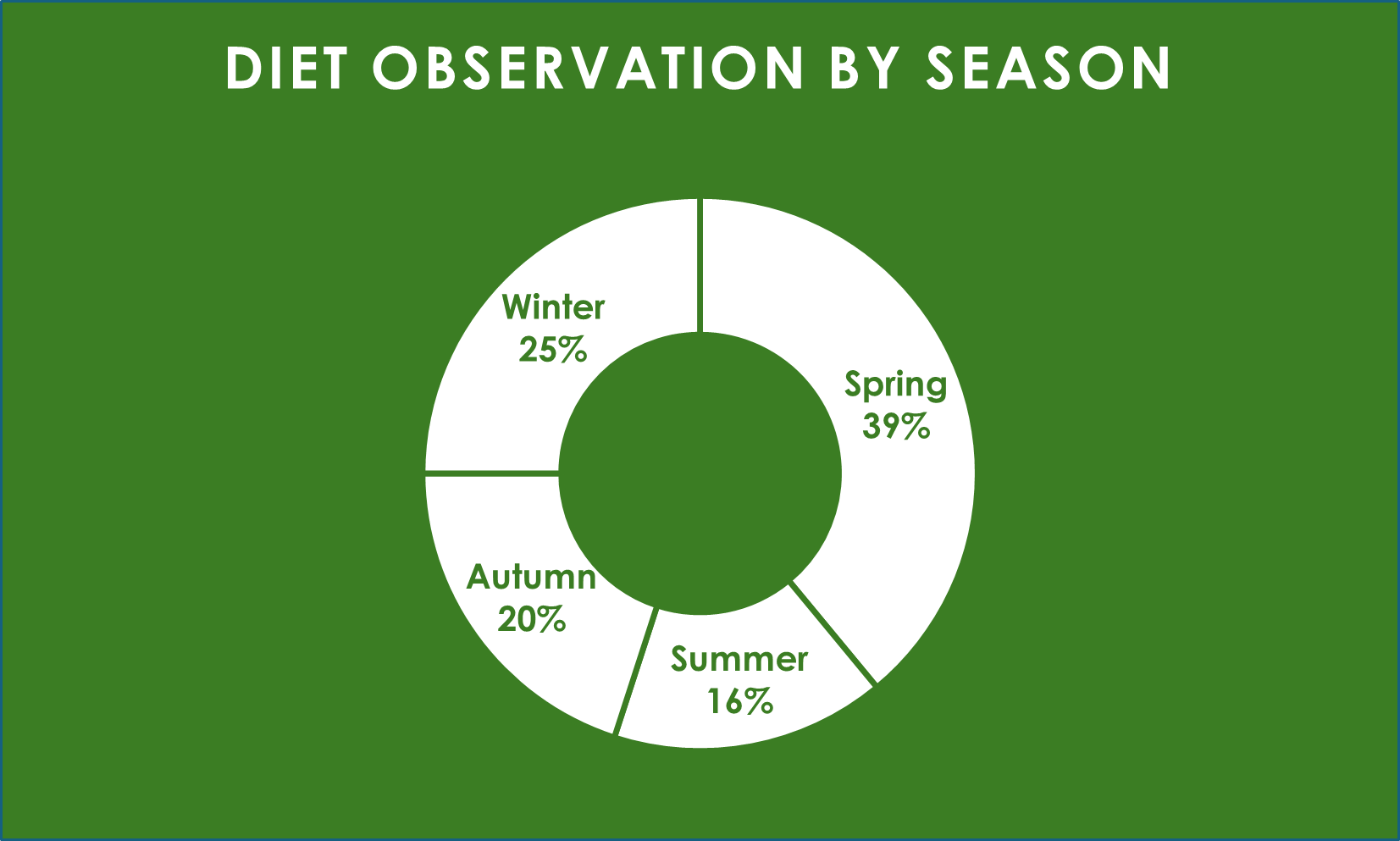
Diet observations are collected and analysed throughout the year, to build an accurate understanding of composition throughout all seasons for Eagles released in Southern England. Diet composition and feeding strategy also changes as White-tailed Eagles mature, so observations have been collected at each stage of development through to fully mature breeding adults. To fully understand the food chain relationships and ecological impact of White-tailed Eagle to each significant species group, the foundation works closely with stakeholders, NGOs and individuals to monitor and further understand population levels.
Below: Chart displaying diet observations by season, followed by chart displaying diet observation by location.
Fish comprise a significant element of White-tailed Eagle Diet, particularly at breeding age. Commonly caught species include seasonally abundant Grey Mullet, Bass and occasionally Eel and Carp. Cuttlefish may also be occasionally caught in the summer months, when they are abundant after spawning. A variety of bird species feature in diet, including species of corvid, gull and wildfowl. Birds become more important for White-tailed Eagles in the winter months, when fish are less available to catch. Mammal species such as Rabbit and Brown Hare also regularly feature within the diet.
For young Eagles, mammal and bird species make up the majority of their diet. But, as White-tailed Eagles reach breeding age, fish becomes an increasingly important prey source.
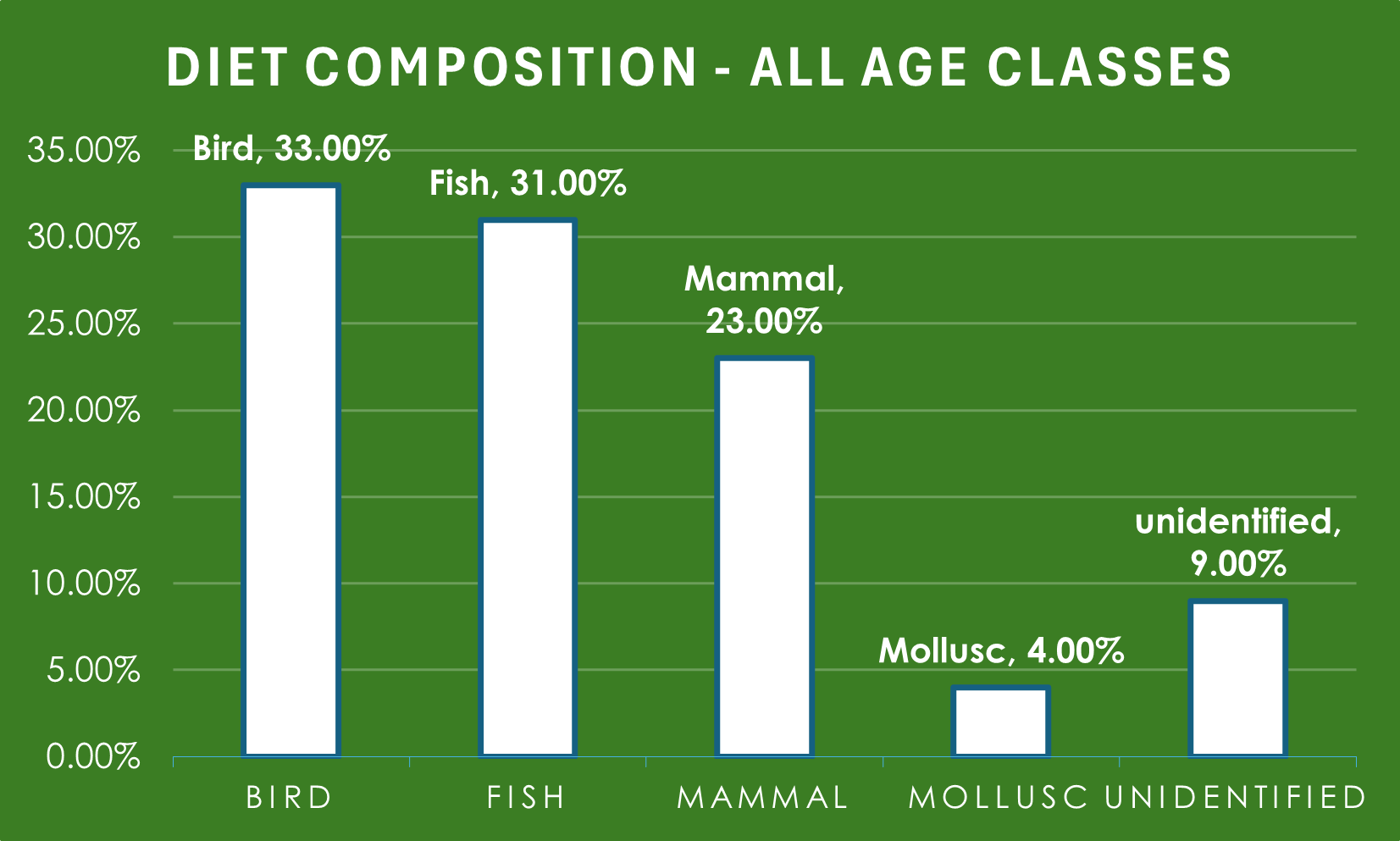
Diet composition by percentage: Bird (33%, Fish 31%, Mammal 23%, Mollusc 4%, unidentified 9%)
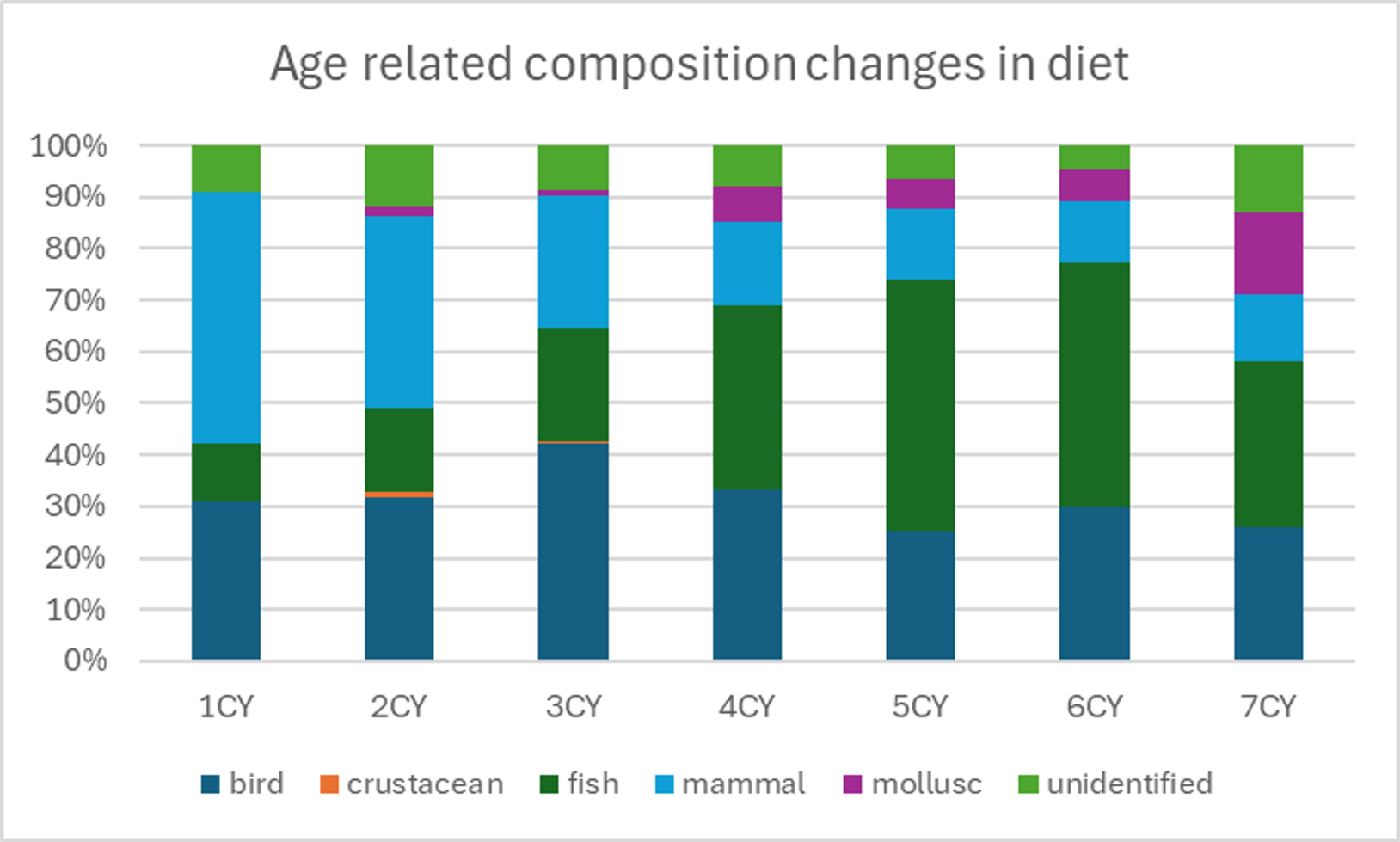
Age related composition changes in diet, showing Eagles at breeding age (4+ years) with a higher proportion of fish in the diet.
For young White-tailed Eagles, scavenging carrion is highly important, but as they gain maturity, more time is spent predating live prey. White-tailed Eagles are also occasional kleptoparasites – meaning they will steal food from other birds.
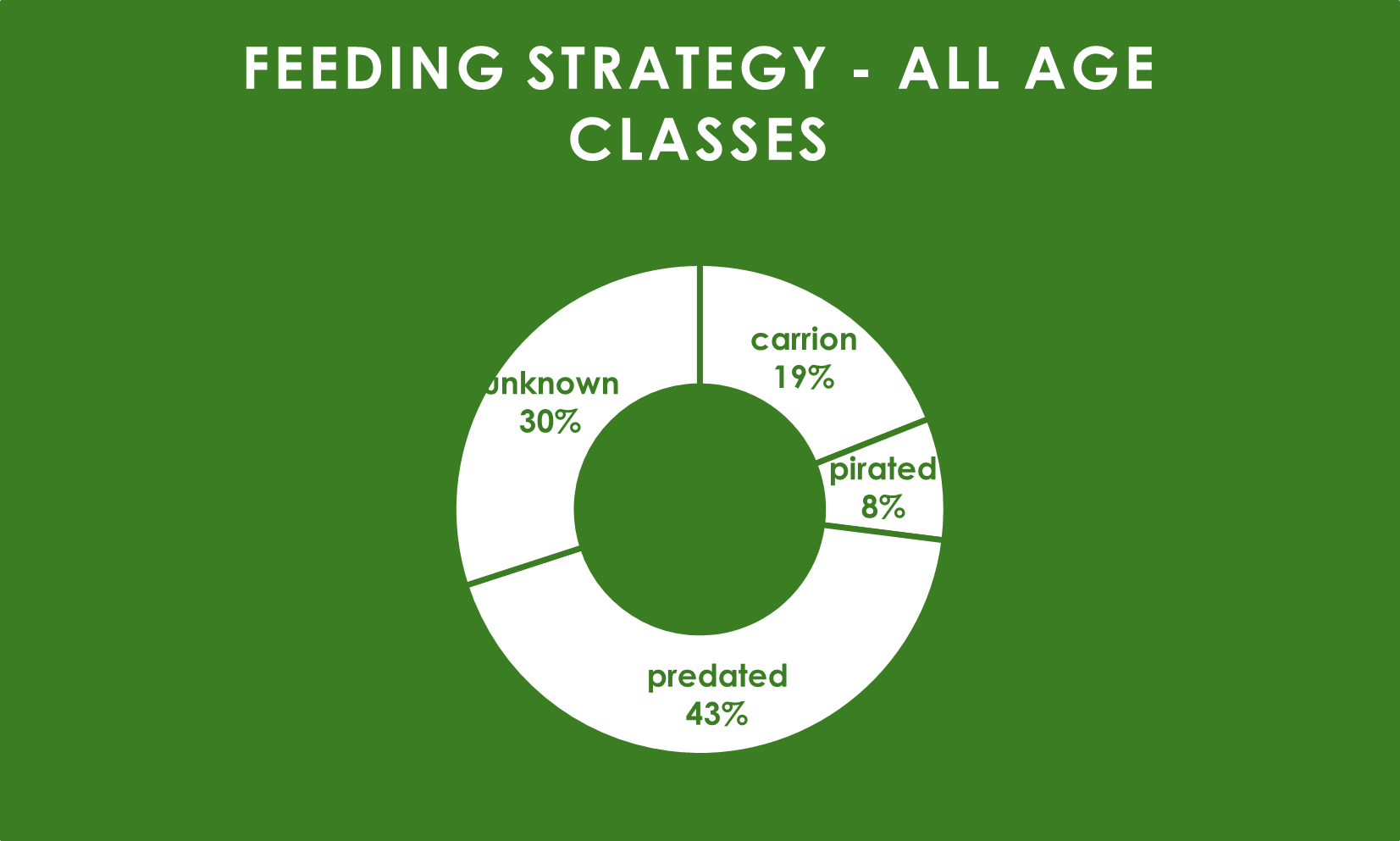
Feeding strategy for all age classes: Carrion 19%, Pirated 8%, Predated 43%, unknown 30%
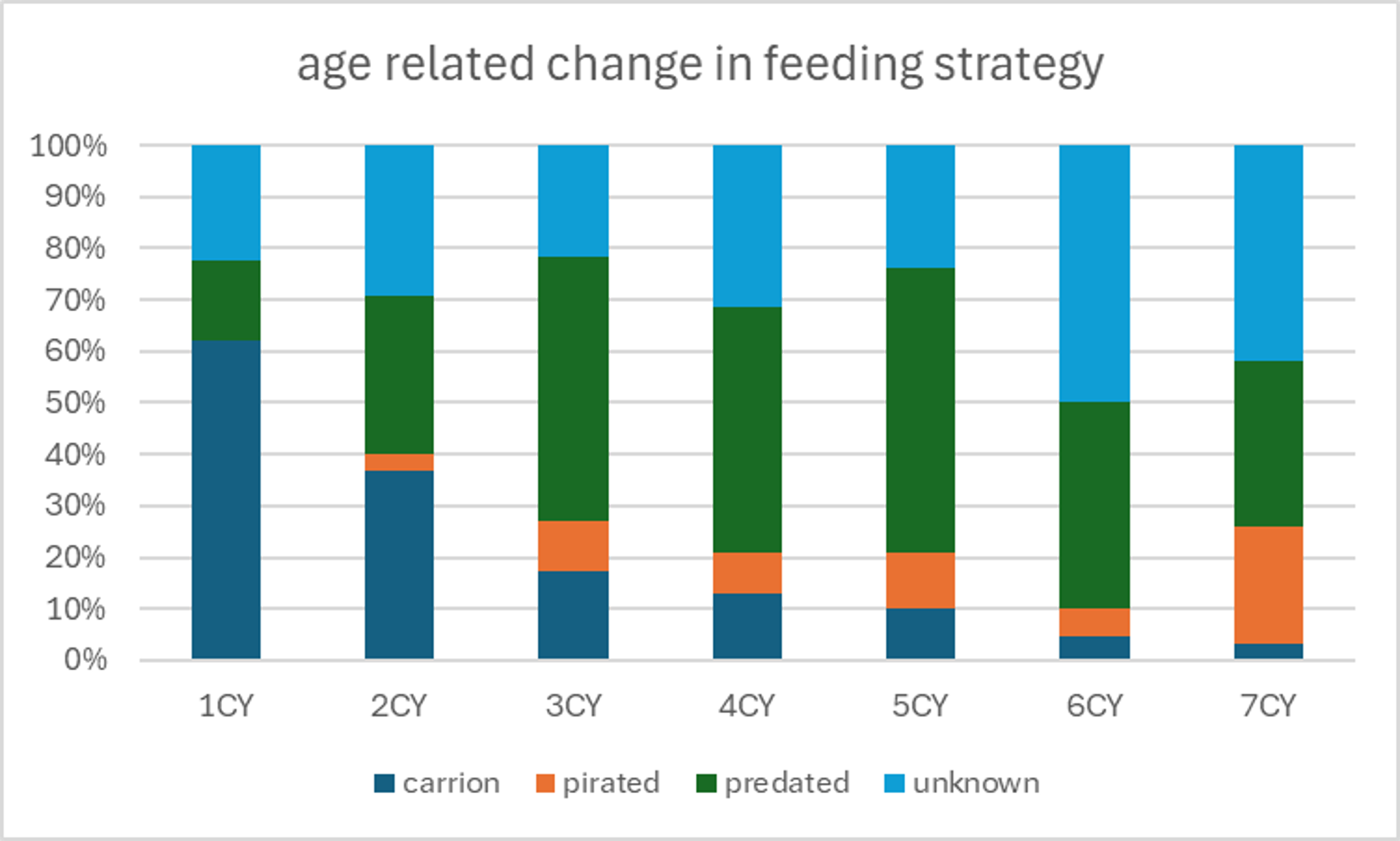
Age related composition changes in feeding strategy, demonstrating carrion as a key feeding strategy for young eagles, and predation more important as the Eagles mature.
Nest camera monitoring
Installing 4G cameras at monitored nest sites enables the project team to analyse and record every prey delivery to the nest within the nestling phase of breeding.
Establishing accurate breeding dietary composition
This full record of diet enables the team to build a clear picture of breeding season diet within Southern England. Two White-tailed Eagle nests were monitored closely by camera in 2025.
Diet during the nestling phase for eagle nest WTE001 is largely comprised of fish, whereas for the first breeding year for nest WTE002, birds were equally important as a food source. Further monitoring will continue for both of these pairs in 2026, to build on the existing data pool.
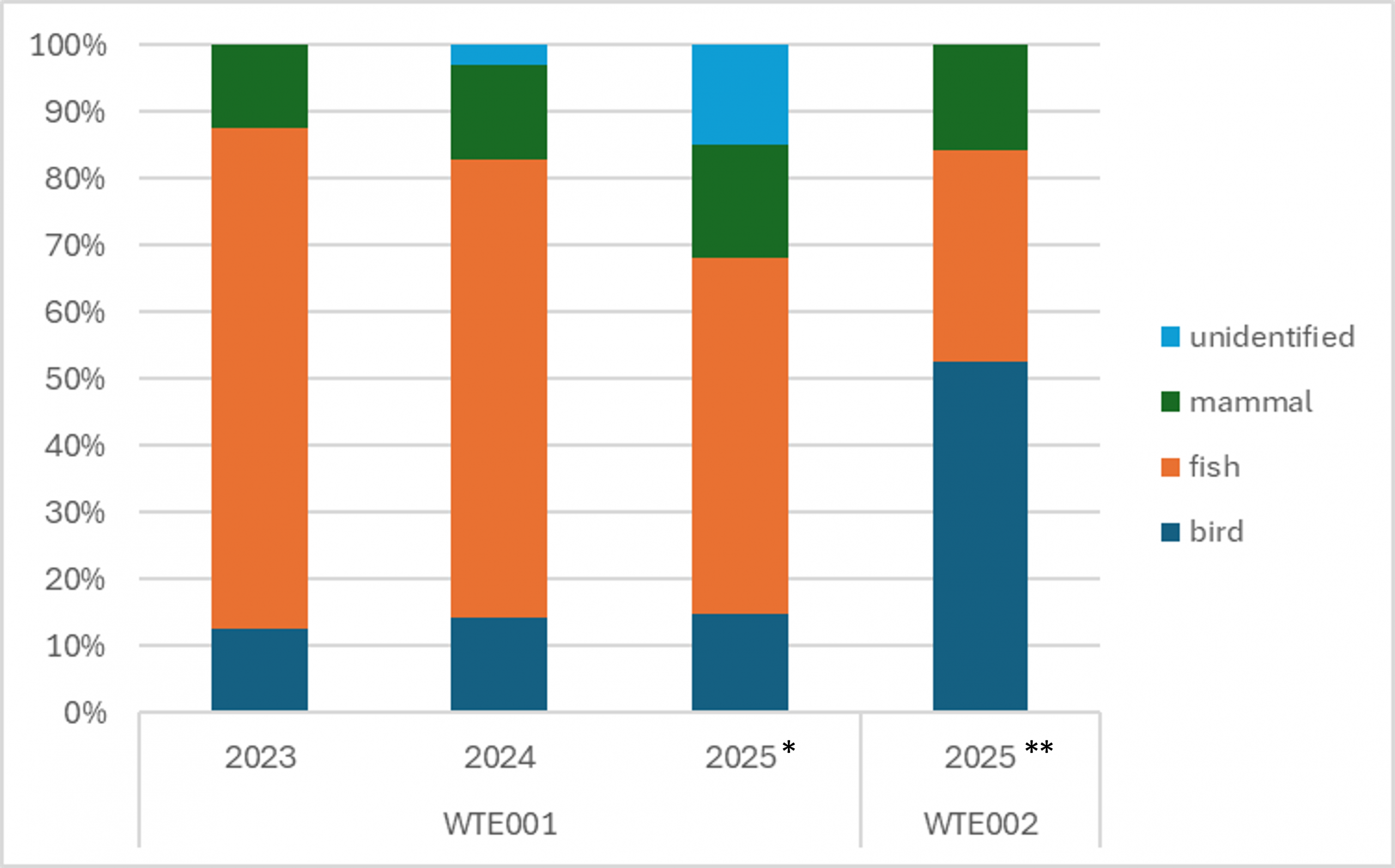
Diet composition from nest camera analysis during the nestling phase of two White-Tailed Eagle nests in Southern England. WTE002 bred for the first time in 2025.
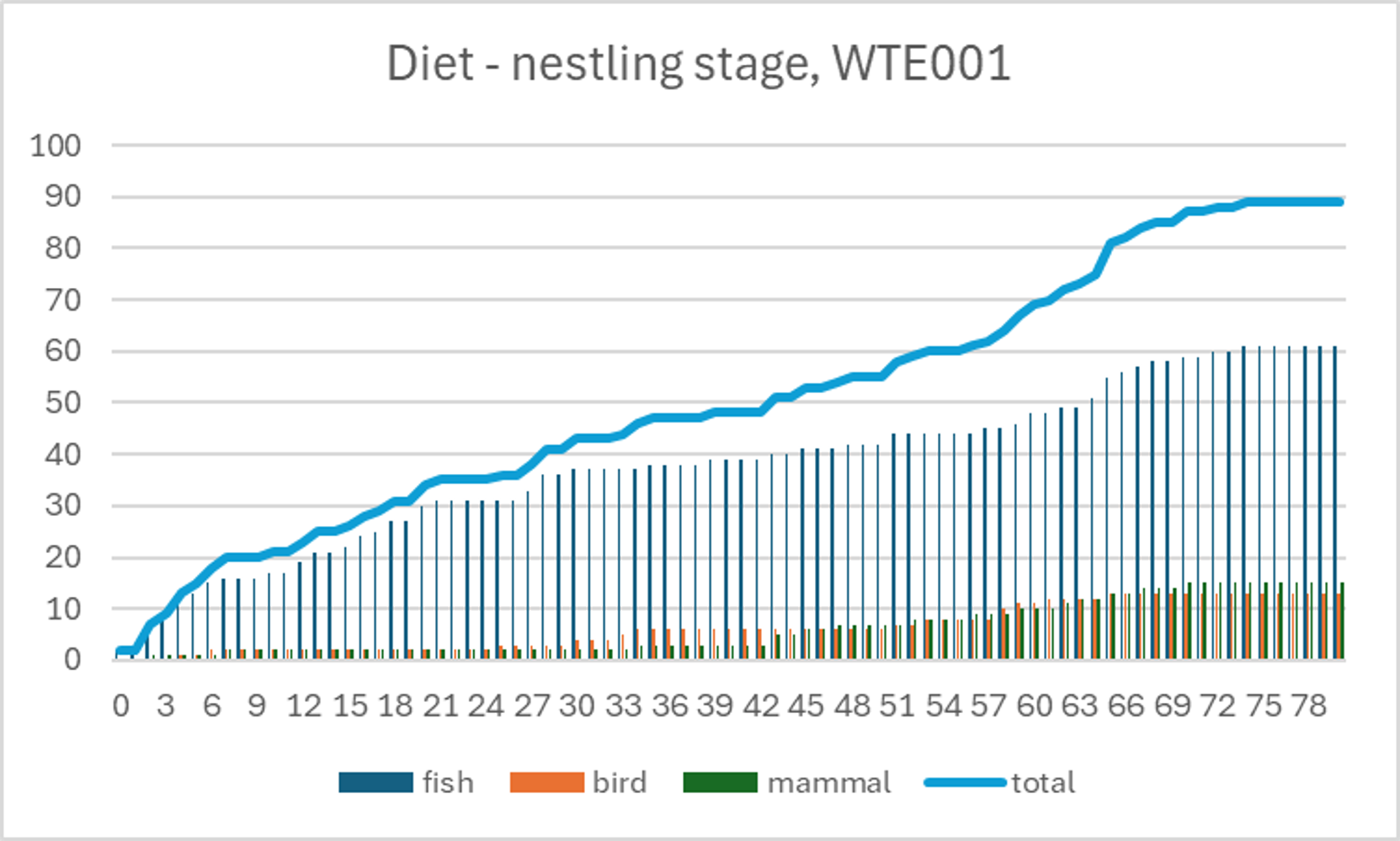
Diet composition at the nestling stage of nest WTE001 – breeding for the third time in 2025.