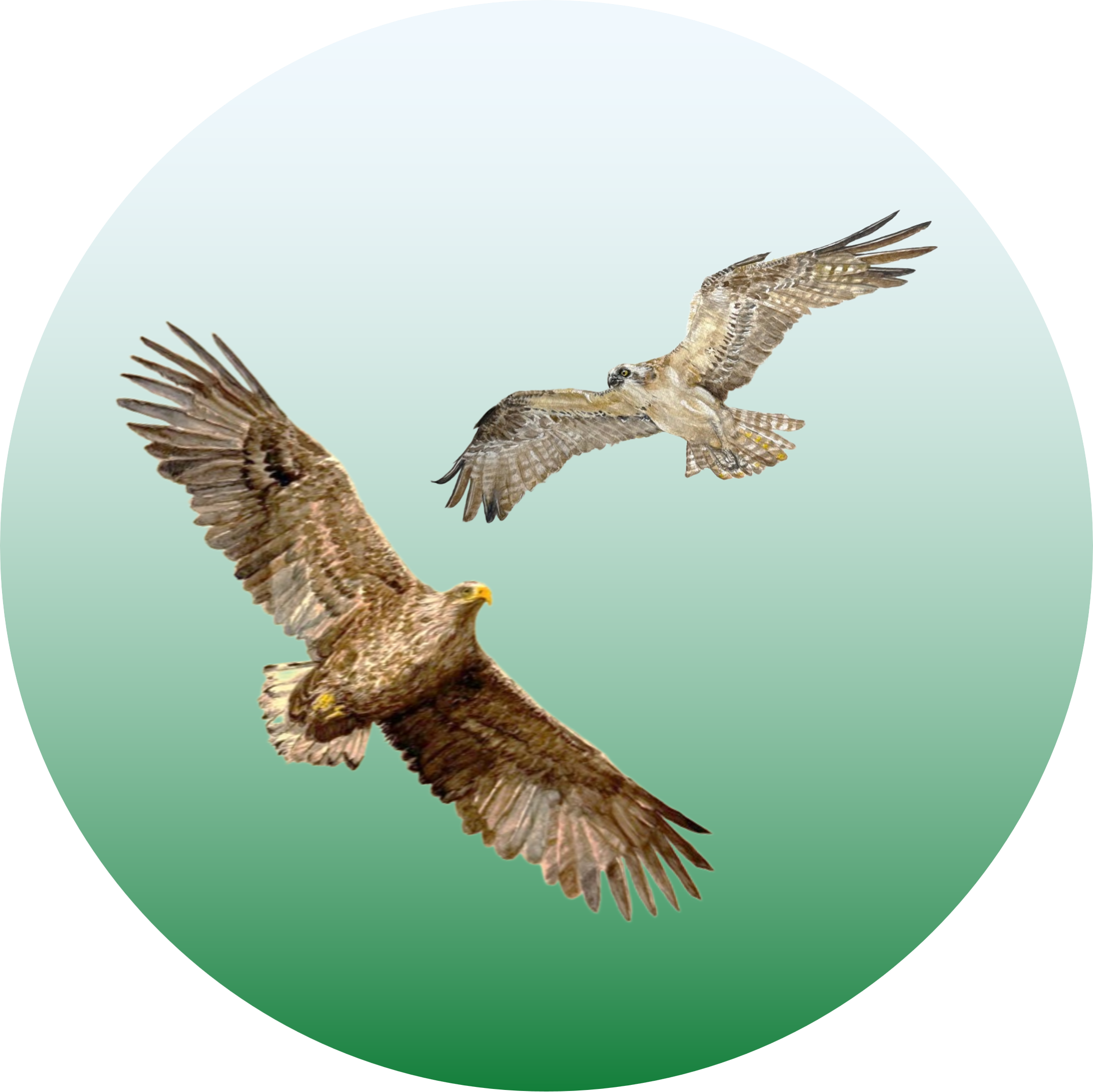
Five pairs of eagles released by the project have now formed bonds and become established pairs. This summer two of these pairs successfully bred and raised young with one chick fledging from a nest in Dorset and two chicks in Sussex.
The two chicks (GE36 and GE37) from the nest in Sussex are both males and are offspring of white-tailed eagles released by the project in 2020. The parent birds – G405 and G471 –have bred every year since 2023.
A single male chick (GE38) fledged from the Dorset nest. This is the second successful breeding attempt for parent birds G463 and G466 and made more remarkable by the fact that the male adult bird has only one leg after it lost this five years ago.
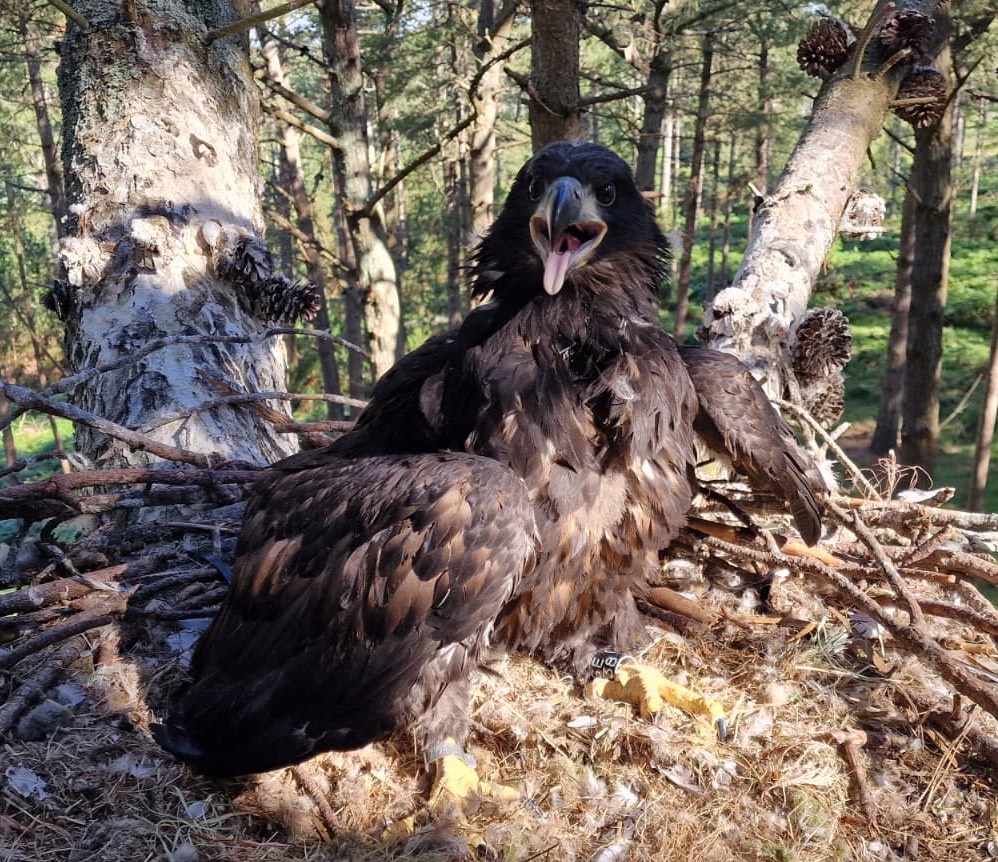
This year’s successful breeding brings the number of these iconic birds born in the wild through the project to nine.
All of the chicks were fitted with satellite tags so that the project team can track their progress. Over the last year they have used satellite data to follow previous fledglings as they have explored widely across the UK.
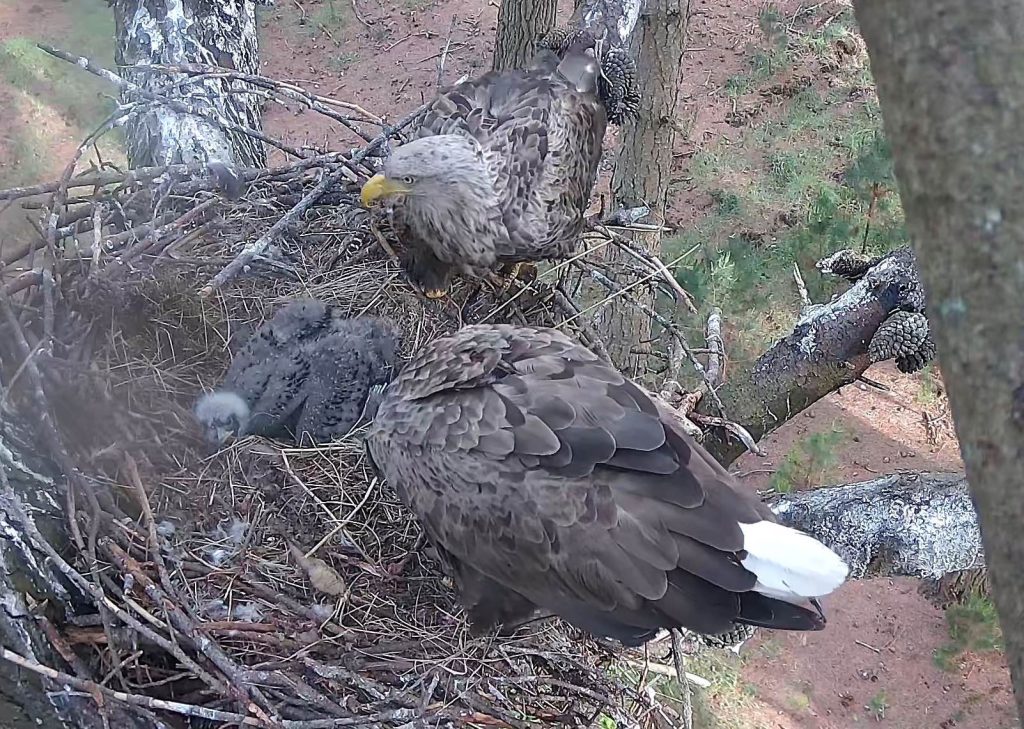
This year the team were also able to track in detail the diet of the breeding eagles using specialist cameras near the nests. The team collected over 300 records of food brought into the nest by the parents, with fish being by far the most frequent item.
Roy Dennis OBE from the Roy Dennis Wildlife Foundation, said:
“This year’s breeding success is another important milestone in the return of this lost species to England; it shows what can be achieved by very skilled wildlife managers. This is now the fourth year where these released eagles have raised and fledged chicks. With a further three pairs of eagles also well-established we should see this progress continue in the next few years.
“Restoring a species takes many years and requires the support of a wide range of communities and organisations, in particular landowners and farmers. I would like to thank everyone who is supporting the project and supporting essential nature recovery in this way.”
Steve Egerton-Read, White-Tailed Eagle Project Officer for Forestry England, said:
“It’s been another long summer of watching and hoping that the eagles would be successful in breeding and raising young. There is nothing quite like that moment of seeing the chicks hatch and first appear in the nest. It is then a waiting game while we watch their progress. We are delighted that these three chicks made it through and will be closely watching their progress as they begin to explore the landscape.
“The breeding season is a challenging time for the parent birds. It’s also a busy time for our team as we closely monitor the nests. This year we were able to monitor every item of food coming into the nests and can see that fish is by far the favoured item for these wetland loving birds.”
White-tailed eagles are Britain’s largest birds of prey with a wingspan of up to 2.5 metres and were once widespread across England. Human persecution caused their extinction, with the last pair breeding in southern England in 1780. In 2019, Roy Dennis Wildlife Foundation and Forestry England began reintroducing these iconic birds to the English landscape.
To date, 56 young white-tailed eagles have been released. This includes five birds released this summer from the team’s base on the Isle of Wight, and for the first time this year additional releases of six birds at Exmoor National Park, in partnership with Exmoor National Park Authority. The reintroduction of white-tailed eagles is conducted under licence from Natural England, the Government’s wildlife licensing authority. Birds for release are collected by the Roy Dennis Wildlife Foundation team from nests in Scotland under licence from NatureScot
Leave a Reply