Successful Wildlife Management with Local People and Rare Birds
08.04.2026 – Dr Roy Dennis OBE
It’s snowing but, I know, it’s spring. When I was crofting I remember these times as lambing storms – not something meteorically called ‘Dave’. The dippers under our local bridge are nesting and locally a drenched pair of ospreys were standing on their old eyrie yesterday.
Image: Osprey, John Wright
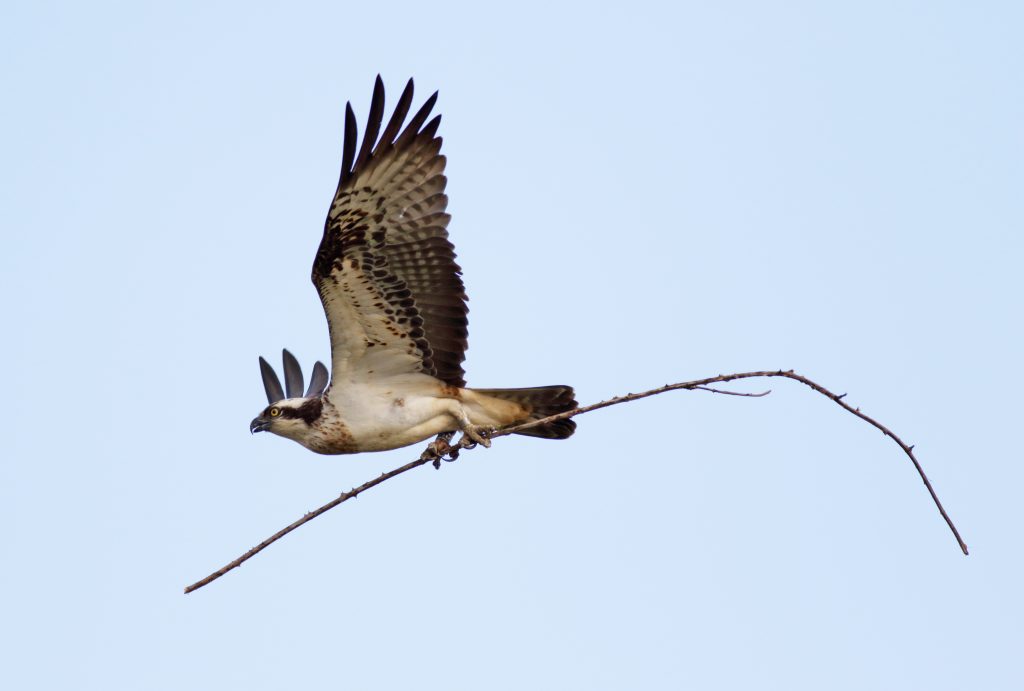
For me, springtime and ospreys go together, and I’m so pleased to see them safely back from Africa. Friends elsewhere are doing the same – Carlos in Santandar tells me he has a new female at his pair, and she’s a granddaughter of a young osprey I translocated from Scotland to the Basque country. The next email was Wendy informing me the pair in Switzerland had arrived and were busy mating.
Successful wildlife management always becomes more than the birds; it’s about human relationships that make the hard times easier and the future easier to predict. It’s also about meeting up with old friends in the field – how was their winter, what are their children doing now and has the calving started? It’s these close and friendly relationships that allow us to achieve so much with the restoring rare birds, like eagles and ospreys.
The first osprey pair outside Strathspey, and only the third in Scotland, nested in Moray in a live Scots pine on little hillock of six trees in the middle of a farm field. Now only one larch remains alive. Thinking of the future, I was chatting to the landowner a week or so ago about the need to think of succession – I mean for ospreys not people. Early this week, he and his team planted Scots pine and larch trees around the old dead ones. And as he said, “should be ready for an osprey’s nest next century”. I liked that.
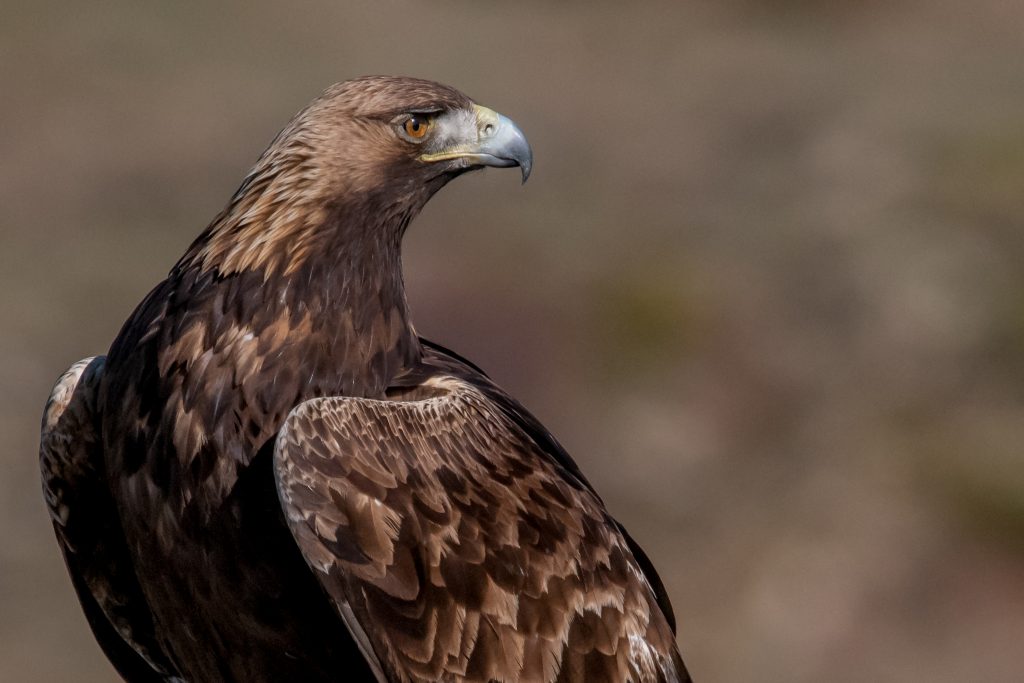
Early last month, a lady wrote to me and said that her husband died last year and in his will was a donation of £25,000 for our Foundation. I found his original email from 2012 where he told me of his great love of eagles and that he would remember us in his will. He wanted his money to go for birds not for ‘plushy offices’.
Image: Golden Eagle, Mike Crutch
I replied to him that we didn’t do plushy offices – and still don’t. His wife wanted to scatter his ashes where eagles fly. My colleague Tim is going to meet her in the Scottish Borders in May and take her to eagle country where she can carry out her husband’s wishes. We like that people appreciate our concentration on fieldwork, restoring nature and working with local people. It’s donations like this that allows our small team to do good work – in many ways ‘punching above our weight’.
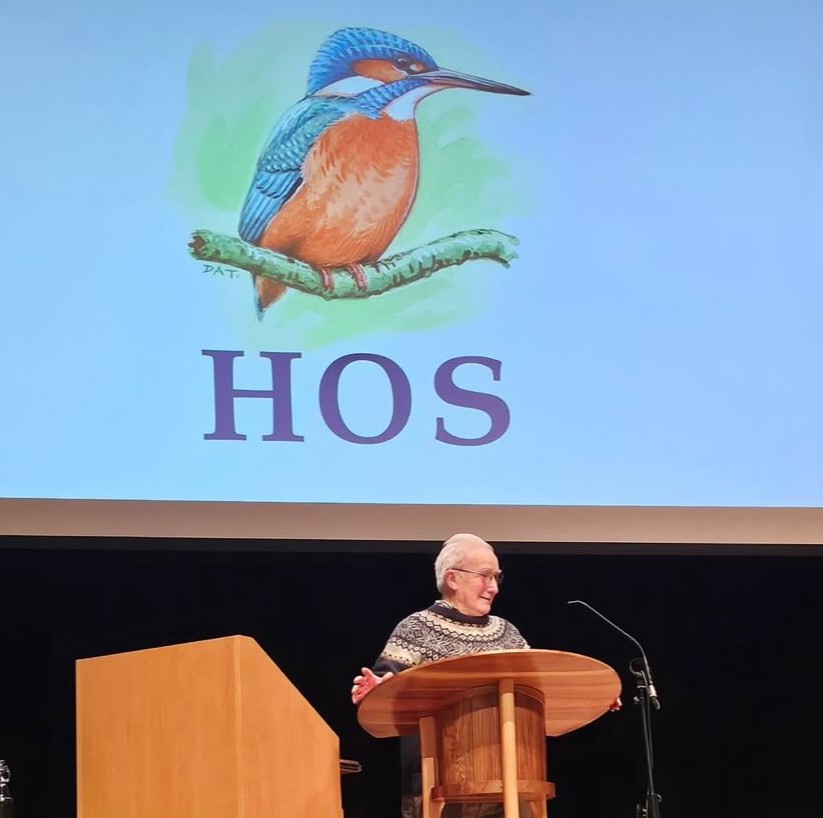
On the last Saturday of March, I went to the annual conference of the Hampshire Ornithological Society in Winchester where I gave a presentation, followed by a really nice conversation, on the stage, with Chris Packham, and a Q&A session to an audience of 580 birdwatchers.
I loved meeting old friends, as well many new ones who came up and quietly told me how much they appreciated us bringing back ospreys, kites and sea eagles to Hampshire. I was born in the New Forest, so helping the Bird Club was like saying thank you for all that I learnt when I was a teenage bird watcher exploring the saltmarshes of the Solent, the woods and heaths of the New Forest and bird migrations on the Isle of Wight. I was fortunate to have been mentored by truly amazing older birders.
Image: Roy Dennis speaking for the Hampshire Ornithological Society, James Cutting
While down south, my colleague Tim, also took me to Salisbury Plain in Wiltshire. Our next project is to try to restore the Montagu’s Harrier. It will not be easy to bring in young from the nearby Continent, but I remember this beautiful bird as part of my youth. Watching nesting pairs in the New Forest – pale grey males dropping prey, in flight, to their mates and seeing them quartering Bodmin Moor when we were driving to our Scout camp.
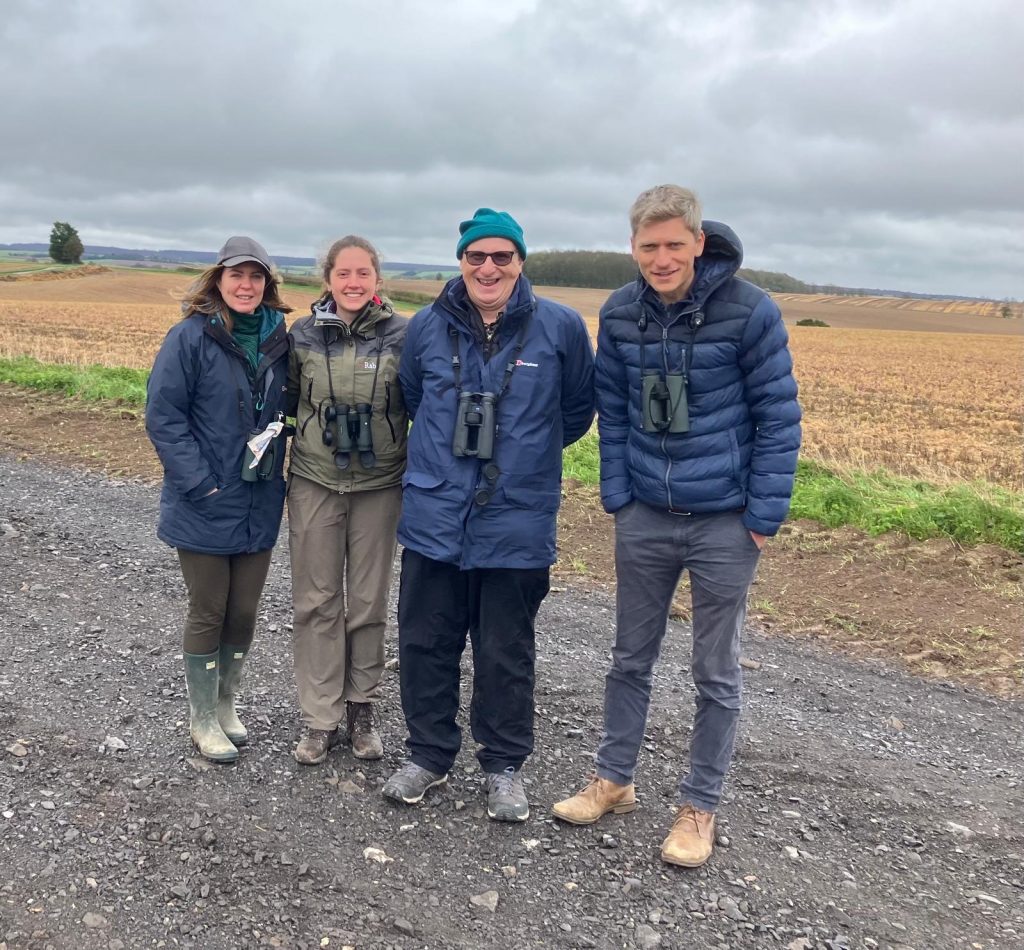
Working with others we should be able to have them back, but it will be challenging. This trip was the first time that the four of us in our Foundation, Tim, Zoe, Naomi and me, could get together and plan future fieldwork and bounce new ideas.
Image: visiting Wiltshire discussing plans for restoring Montagu’s Harrier. Zoe Smith, Naomi Johns, Paul Castle (Wiltshire Ornithological Society) and Dr Tim Mackrill.
Before heading home, a friend took me to meet the Great Bustard Group on Salisbury Plain. David Waters and his colleagues showed us a flock of about twenty birds on a farmed hillside. Some of the males were starting their incredible display – turning themselves nearly inside-out to show off the mass of brilliant white feathers – visible a mile off. I visited David twenty years ago on a cold grey morning when life, at the start of his project, was very hard graft. I’m so pleased his enthusiasm, and dedication has brought such a magnificent bird back to the UK. There’s an old friendship link here as well, for David’s father, a medical doctor, was an old friend from the early 1960s when we were together on a Nature Conservancy research study of grey seals on the remote island of North Rona.
Leave a Reply