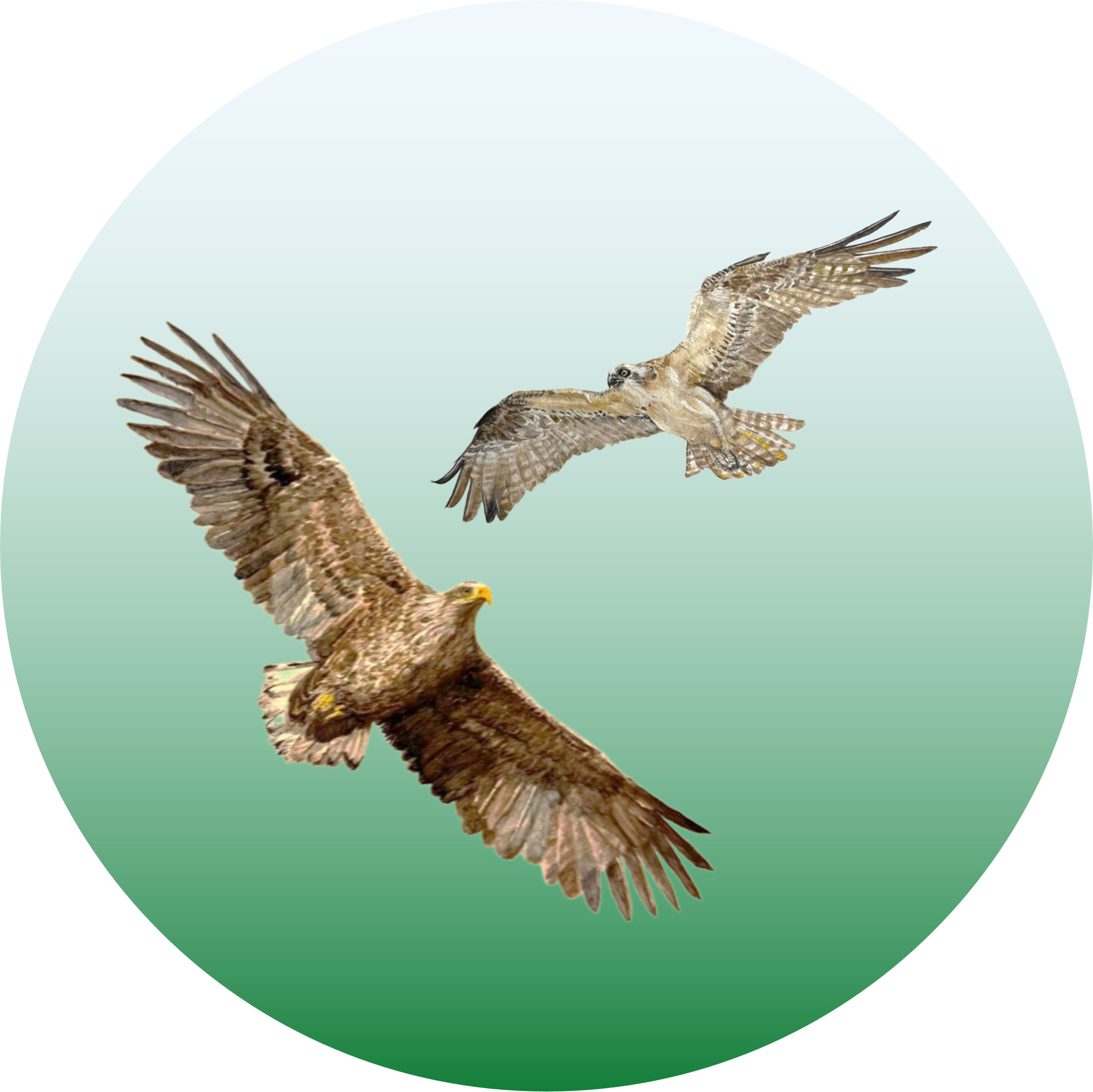
The Roy Dennis Wildlife Foundation is working in partnership with local residents within the Mendip Hills National Landscape to encourage the recovery of breeding Ospreys to the area.
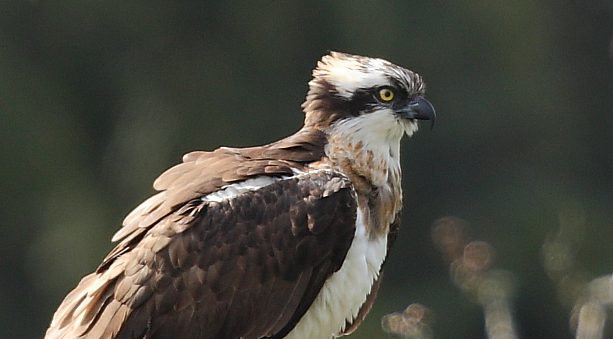

Above: Perching Osprey (photographed in 2013 by Nigel Milbourne), Mendip Hills National Landscape logo (project funder).
The Mendip Hills in Somerset provide an ideal landscape for foraging and nesting Ospreys, and the species would have been prevalent throughout Somerset prior to their English extinction after the last recorded breeding in 1847. The region is also within a major flyway for Ospreys returning to breed further north in England, Wales and Scotland, and reliably receives sightings of the species each spring and autumn. After an influx of Ospreys were sighted in 2013, Nigel Milbourne, the late Robin Prytherch, and Ken Carruthers built and arranged for the installation of an initial series of Osprey nests, with help from Sophie Edwards (Bristol Water) and Chantal Brown (Avon Wildlife Trust), during 2016-17. In 2025, Nigel contacted the Roy Dennis Wildlife Foundation to discuss the potential to work together to continue this work.
We believe that the habitat provides plentiful fishing opportunities and would be ideal for a breeding population of Ospreys. The Mendips are a really key location, lying halfway between the growing the active breeding pair and translocation site at Poole Harbour, and the population in South Wales, which includes the Usk Valley Nest. Resultingly, the arrival of a pioneering pair in the area is a real possibility.
Working with local residents and organisations, we have installed a series of artificial nests with a view to drawing in potential breeding adults. Young birds looking to breed for the first time are attracted to large nests that may have been abandoned by Ospreys or other large birds, so in areas where these species are absent or extremely low in number, building nests is a key method for encouraging new pairs to establish. This can be done in mature trees, or in the absence of mature trees, on a telegraph pole. We are incredibly grateful for the ongoing enthusiasm and support received by the local farming and landowner community, particularly to Chris Patch for his continued hard work, without whom we would not have been able to begin the project as successfully as we have done.
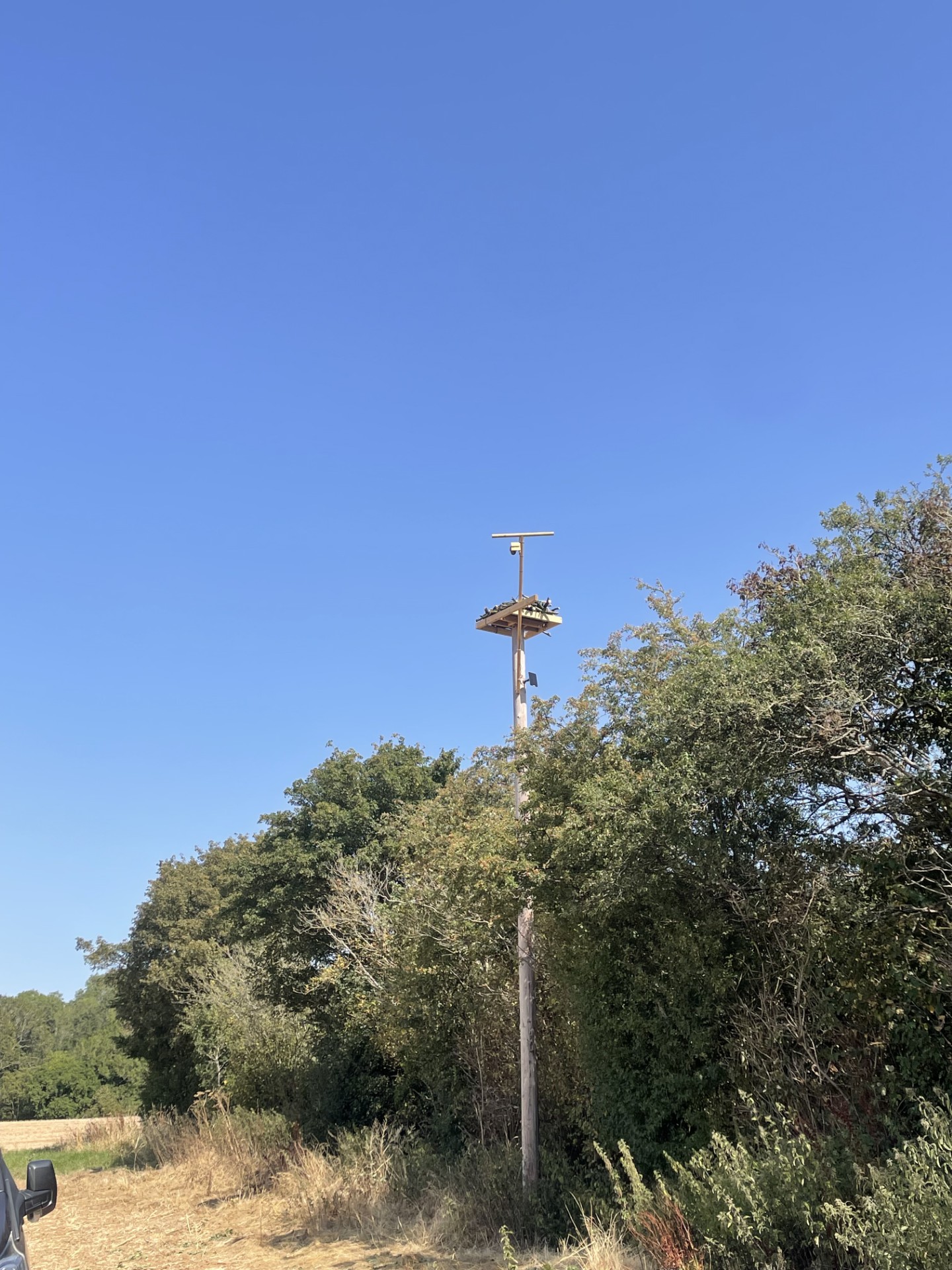
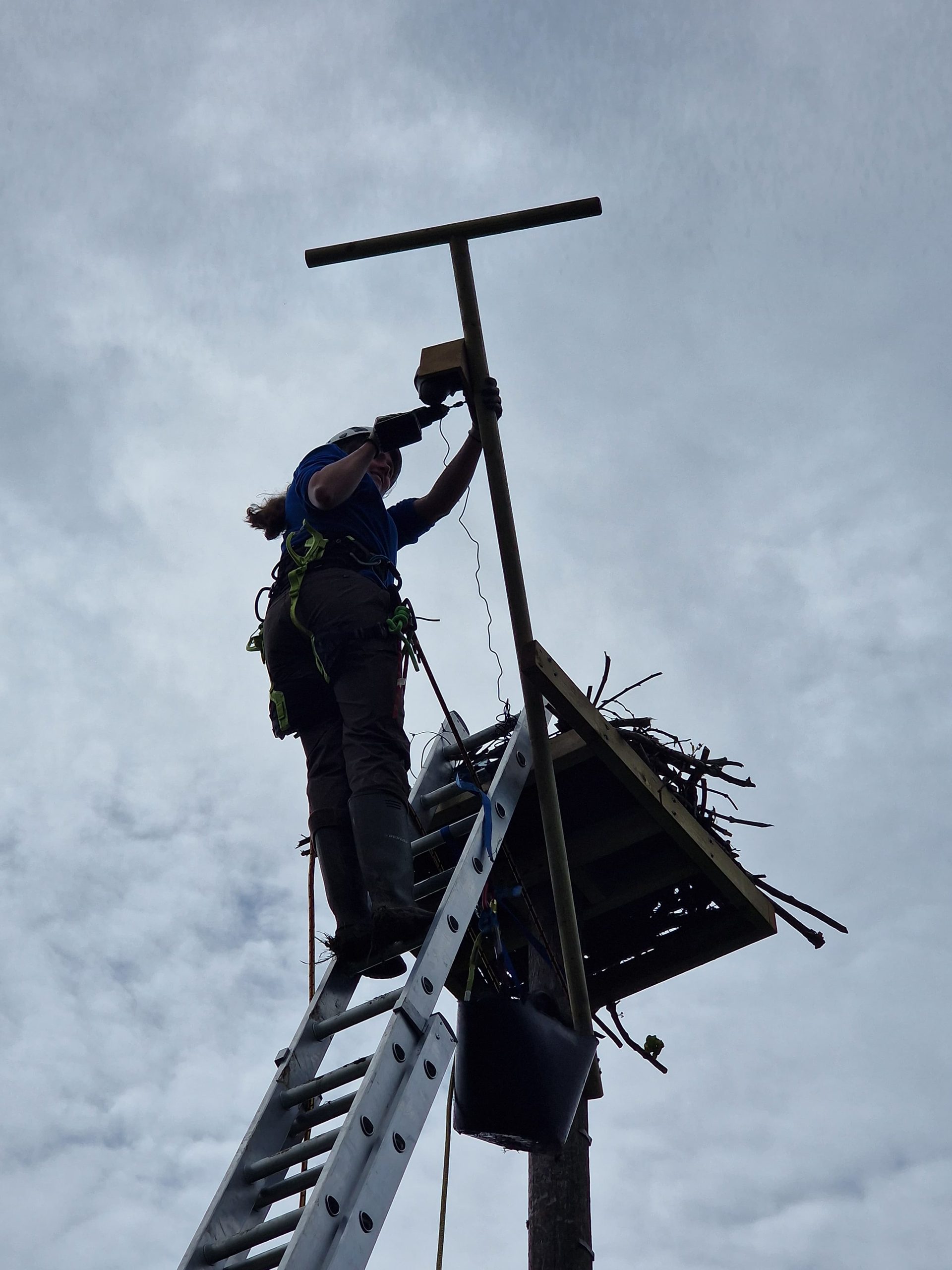
Above: installation of an artificial nest on a telegraph pole. A monitoring camera is also installed to enable the project team to identify any Ospreys that may visit the nest.
An Osprey returning to England on it’s first spring migration is likely to arrive in late Spring or early Summer, and may visit multiple potential nesting sites throughout their chosen locality and find potential mates, before breeding in the following year. We hope that two of these roaming birds may establish a pair bond in the area, and select one of the installed nests for breeding in the coming years.
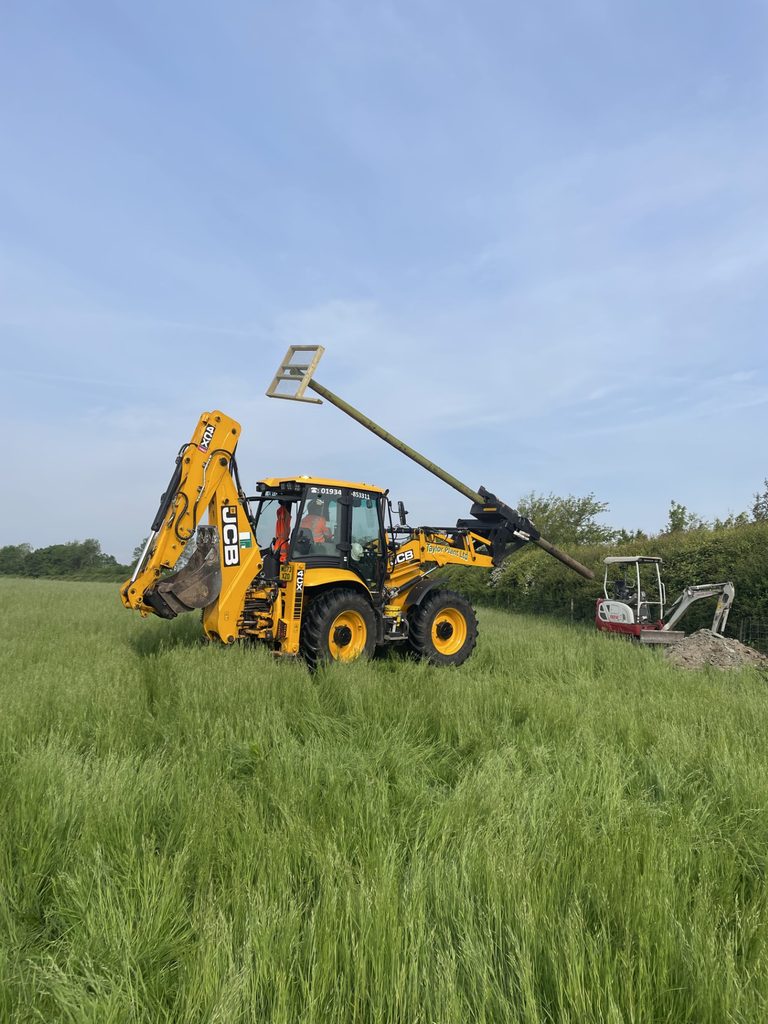
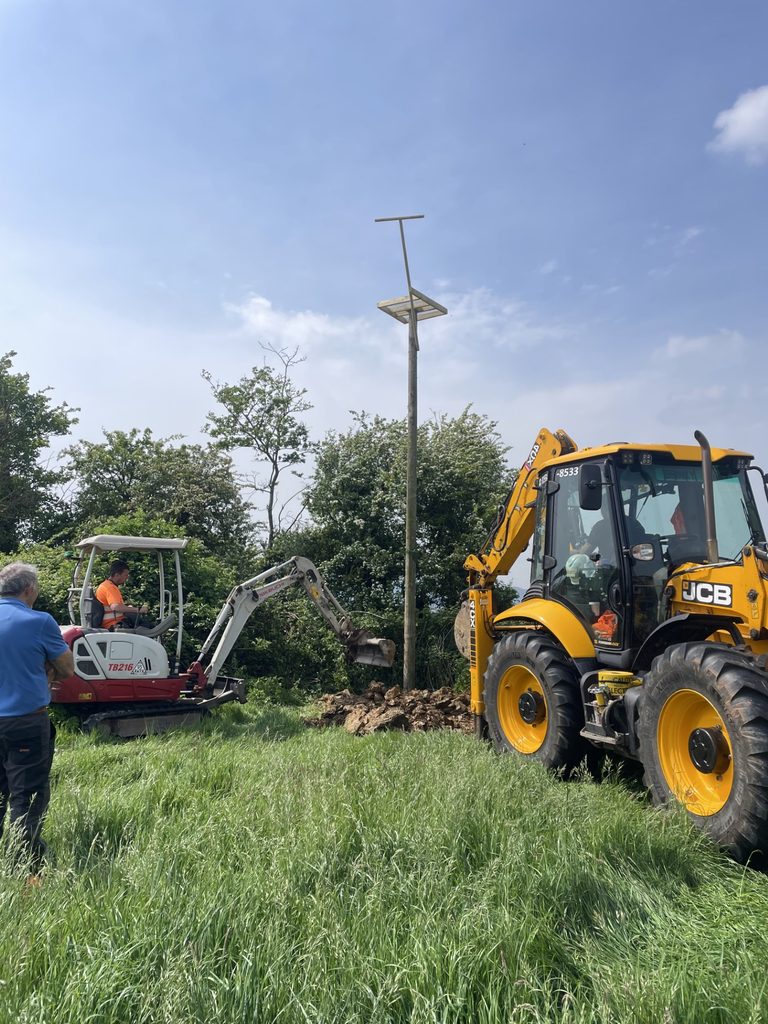
Above: Taylor Plant Ltd installing Osprey nest platforms for the project in 2026
For each installed nest, we also fit a specialised solar powered camera, which enables us to monitor any activity recorded on the nest remotely. In May 2026, a female Osprey arrived in the area and stayed for several weeks where she was repeatedly sighted fishing and perching at Chew Valley lake, both by the project team and other local bird watchers. On the evening of 26th of May she visited one of the installed nest sites and stayed there for up to an hour. Unfortunately, there were no reported sightings of an unpaired male for her in the area, but we hope to see this individual again in the future.
Above: an un-rung female Osprey visits one of the installed nests in May 2026
Looking ahead to 2027, we would like to install a total of 10-15 nests within the region; continue an ongoing programme of monitoring for the species; and work alongside local communities to share the latest Osprey updates and inspire a connection to the species.
We would like to recognise the generous contributions made to the project by Taylor Plant Ltd, who have installed all of the telegraph poles for our Osprey nests in Somerset since the inception of the project, their expertise and professionalism has been essential. We would also like to give special recognition to the dedication from local residents Nigel Milbourne and Chris Patch for their ongoing work to engage with local stakeholders, monitor Osprey activity in the region and make the project possible. Detailed reports of Osprey sightings in the area, alongside the history of work carried out to restore the species to the Mendips, can be found via Nigel’s website, Blagdon Lake Birds.

Thank you also to funding support provided by the Mendip Hills National Landscape, and additional funding support provided by the Bristol Airport Community fund.
Leave a Reply