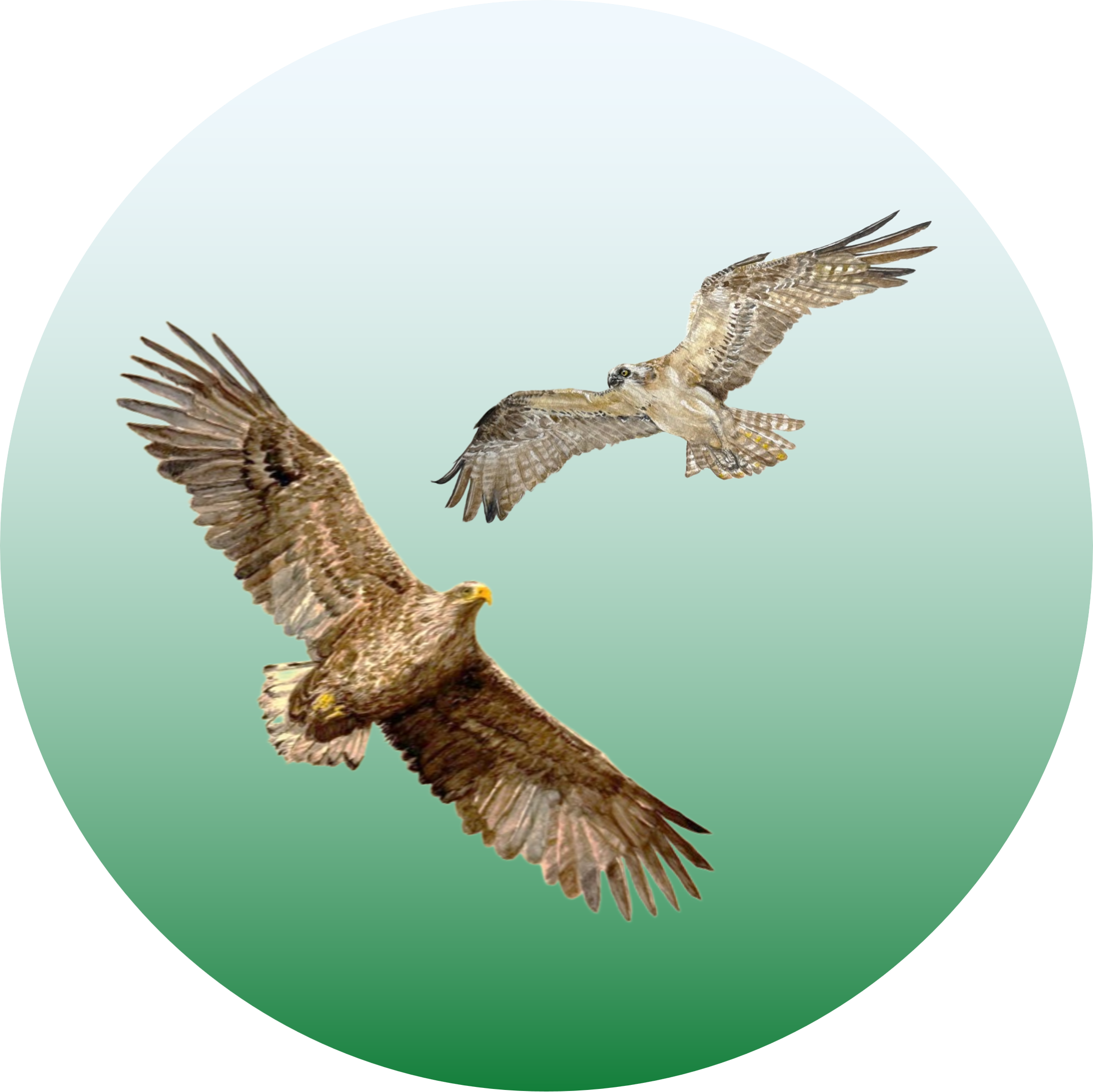
The return of Britain’s largest bird of prey, white-tailed eagles, to the South of England is to be boosted this year following approval today by Natural England, the Government’s wildlife licencing authority, for more of these iconic birds to be released.
White-tailed eagles have a wingspan of up to 2.5 metres and were once widespread across England. Human persecution caused their extinction, with the last pair breeding in southern England in 1780.
The reintroduction project, led by Forestry England and the Roy Dennis Wildlife Foundation, will add to its existing programme of releases on the Isle of Wight which began in 2019 by working with Exmoor National Park Authority to release up to 20 young eagles from this additional location over the course of three years. Releases will take place at both locations this summer.
The additional releases will help to boost the number of birds already in the wild and expand their breeding range into South West England. Exmoor was chosen as an additional location after tracking data from the released birds showed the area had been frequently visited by several of them and provided suitable habitat. It is known that the species formerly bred along the Exmoor coastline.
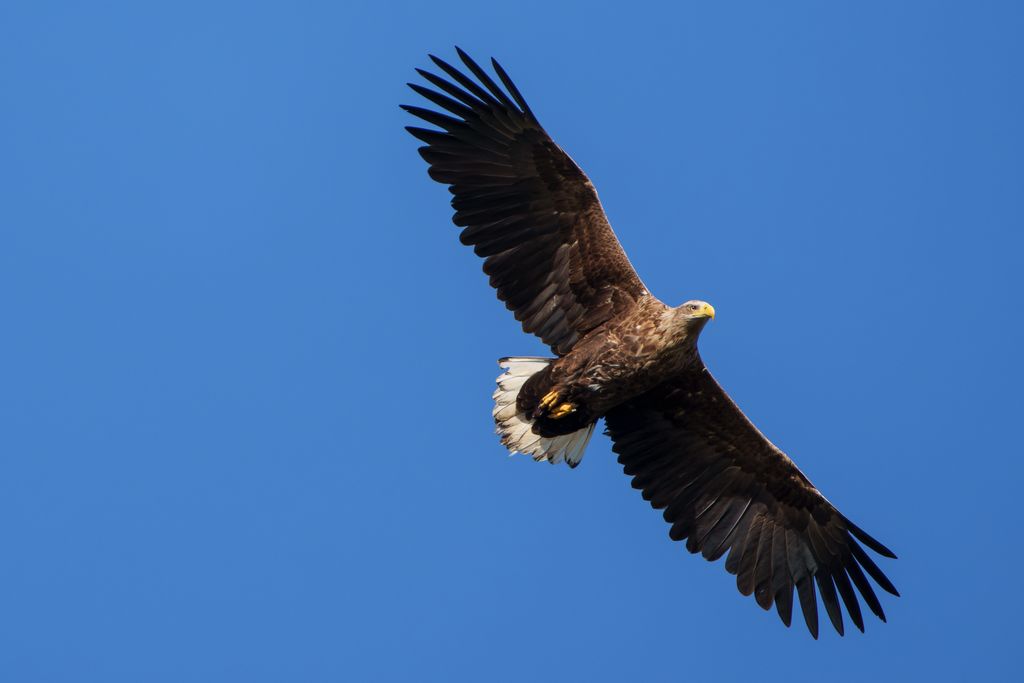
G471 visiting Exmoor (image by Jacqui Leeming)
To date, 45 young white-tailed eagles have been released from the project’s base on the Isle of Wight. Four pairs of birds have bonded and successfully formed territories along the south coast. The first pair to successfully breed did so in 2023, fledging the first chick to be born in the wild in England for over 240 years. Since then, a further 5 chicks have been born in the wild.
Also known as sea eagles, the species is typically found along coastlines and large bodies of open water.
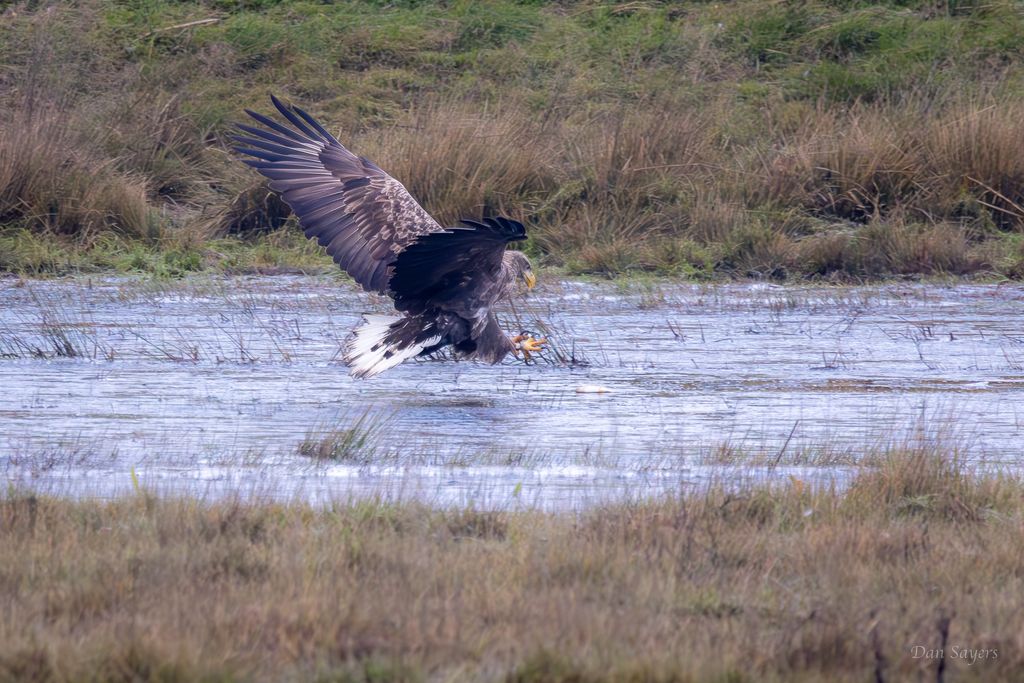
White-tailed eagle fishing in flood water (image by Dan Sayers)
Roy Dennis OBE, Founder of the Roy Dennis Wildlife Foundation, said:
“White-tailed eagles were once a common sight in England but were lost centuries ago. This project is reversing that situation, and I am delighted that we will be able to release additional birds this year and boost their numbers in the wild.
“It is exciting to be able to play a part in restoring these birds back to their former home, and to see how well they are fitting into the English landscape. We will continue to work closely with a range of organisations as we enter this next phase of this exciting project.”
Stephen Egerton-Read, White-Tailed Eagle Project Manager, at Forestry England, said:
“Returning lost species like the white-tailed eagle is a key part of restoring biodiversity and supporting nature recovery.
“Seven years on from the start of this project these birds have begun to successfully return to the English landscape – forming pairs, establishing territories and breeding.
“Adding additional releases at Exmoor will help to boost their numbers and continue their spread across southern England. We hope that in years to come these iconic birds will become a much more common sight.”
Environment Secretary Emma Reynolds said:
“The return of white‑tailed eagles to Exmoor is a powerful example of this government’s commitment to reversing the decline of nature and protecting it for generations to come.
“As part of our new ‘Wild Again’ campaign, we are investing £90 million into species recovery, marking the largest ever government investment to directly support threatened wildlife.”
Natural England National Delivery Director Matthew Heard said:
“Bringing white‑tailed eagles back to this part of the country is a hugely exciting step in restoring England’s natural landscapes. This licence supports a carefully planned reintroduction, grounded in strong evidence and built on collaboration with local communities and land managers.
“This moment has been a long time in the planning and shows what can be achieved when ambitious partnerships, good science and positive engagement come together.”
Ali Hawkins, Senior Ecologist with Exmoor National Park Authority, said:
“Exmoor, with its long expanse of coastal woodland, provides some amazing habitat for White-tailed Eagles, otherwise known as Sea Eagles. Their reintroduction to the National Park is an exciting next step in delivering more for nature recovery and we’d like to thank everyone connected to the project. We are committed to continuing to work with farmers and other stakeholders, to support them in adapting to this species fledging on Exmoor once again. We hope that people will be lucky enough to see one of these incredible birds in the coming years.”
The reintroduction of white-tailed eagles is conducted under licence from Natural England. Birds for release are collected from wild nests in Scotland under licence from NatureScot.
All of the released birds are fitted with satellite tags so that the project team can track their location and study their progress.
Reintroducing white-tailed eagles is a priority in the Government’s 25 Year Environment Plan, and the latest licence announcement follows the Environment Secretary committing £90 million of funding for species recovery across England and exploring the reintroduction of golden eagles.
Implementation of the licence will be closely monitored by Natural England.
Leave a Reply