White-tailed Eagle diet studies
In partnership with Forestry England, Cardiff University and Bournemouth University, we have undertaken extensive fieldwork to further understand the diet of translocated White-tailed Eagles in Southern England.
Image: Jacquie Leeming
Prey remains and pellets
Like many raptors, White-tailed Eagles produce pellets, which we can find and analyse at roost and nest sites.
Nest site cameras
Cameras installed at nest sites enable us to record every prey delivery during incubation and rearing phases.
Field observations
Our ornithologists and Forestry Englands project officers spend many hours monitoring Eagle hunting and feeding behaviour.
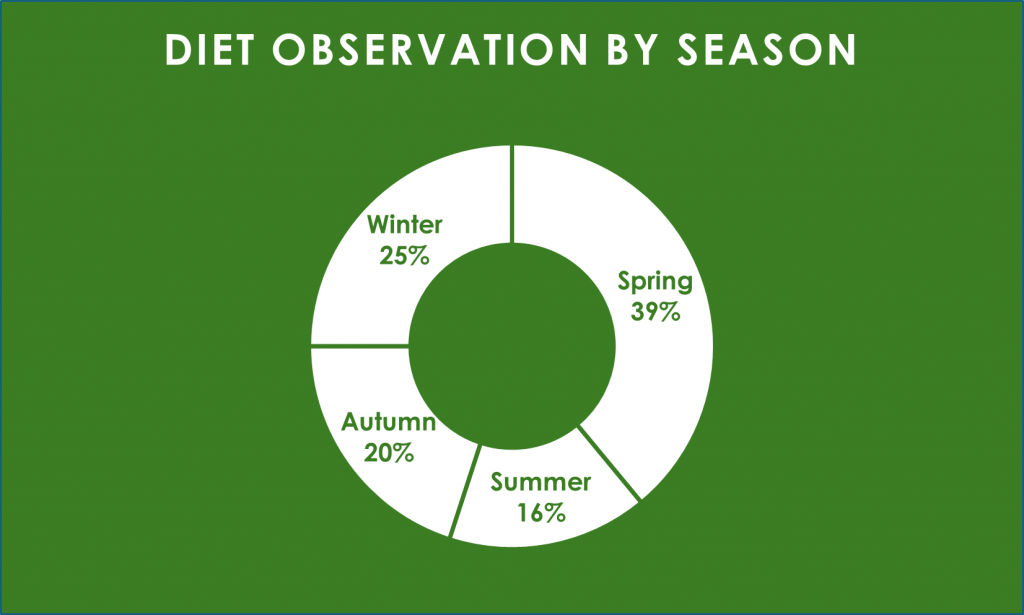
Diet observations are collected and analysed throughout the year, to build an accurate understanding of composition throughout all seasons for Eagles released in Southern England. Diet composition and feeding strategy also changes as White-tailed Eagles mature, so observations have been collected at each stage of development through to fully mature breeding adults. To fully understand the food chain relationships and ecological impact of White-tailed Eagle to each significant species group, the foundation works closely with stakeholders, NGOs and individuals to monitor and further understand population levels.
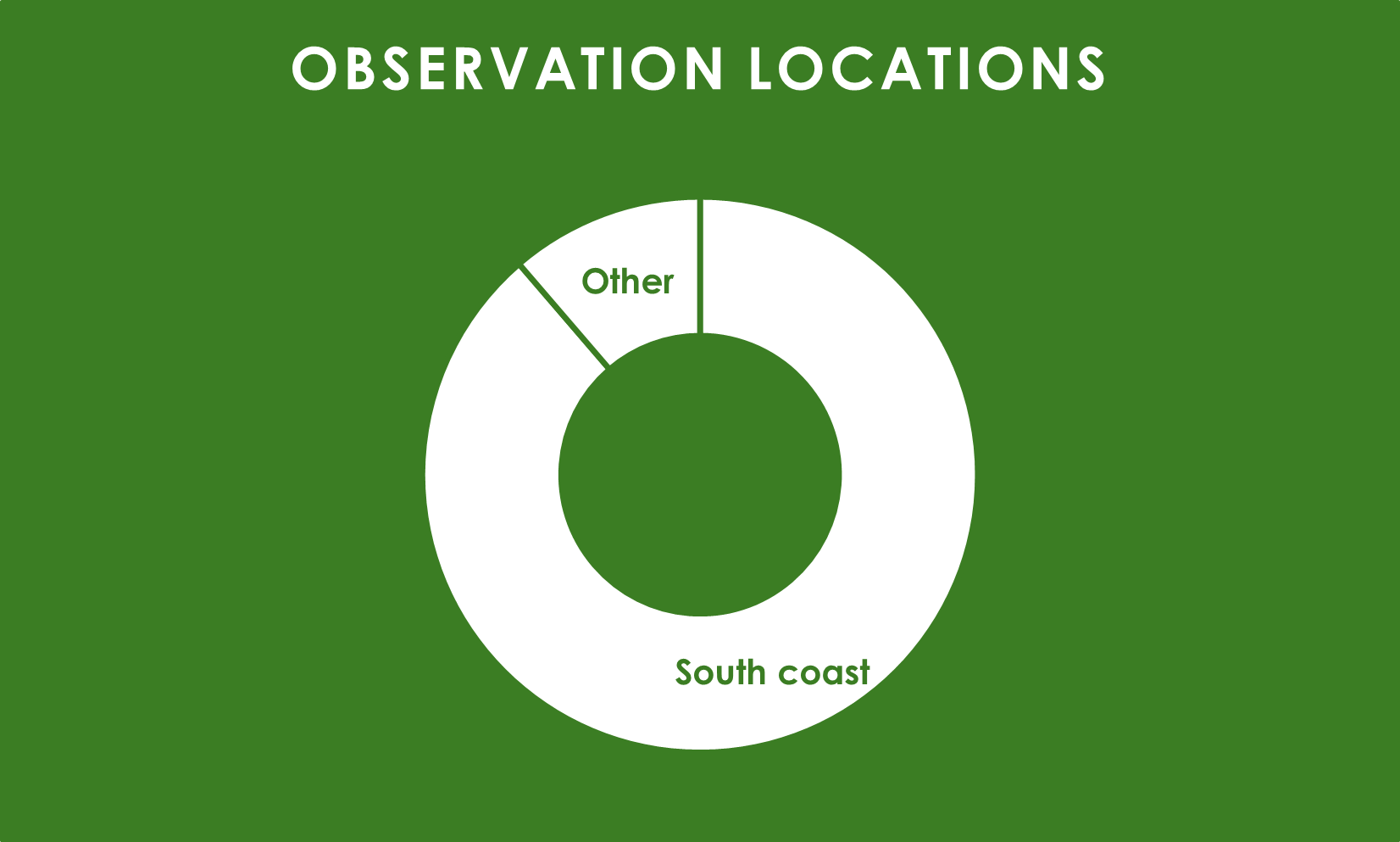
Below: Chart displaying diet observations by season, followed by chart displaying diet observation by location.
Fish comprise a significant element of White-tailed Eagle Diet, particularly at breeding age. Commonly caught species include seasonally abundant Grey Mullet, Bass and occasionally Eel and Carp. Cuttlefish may also be occasionally caught in the summer months, when they are abundant after spawning. A variety of bird species feature in diet, including species of corvid, gull and wildfowl. Birds become more important for White-tailed Eagles in the winter months, when fish are less available to catch. Mammal species such as Rabbit and Brown Hare also regularly feature within the diet.
For young Eagles, mammal and bird species make up the majority of their diet. But, as White-tailed Eagles reach breeding age, Fish becomes an increasingly important prey source.
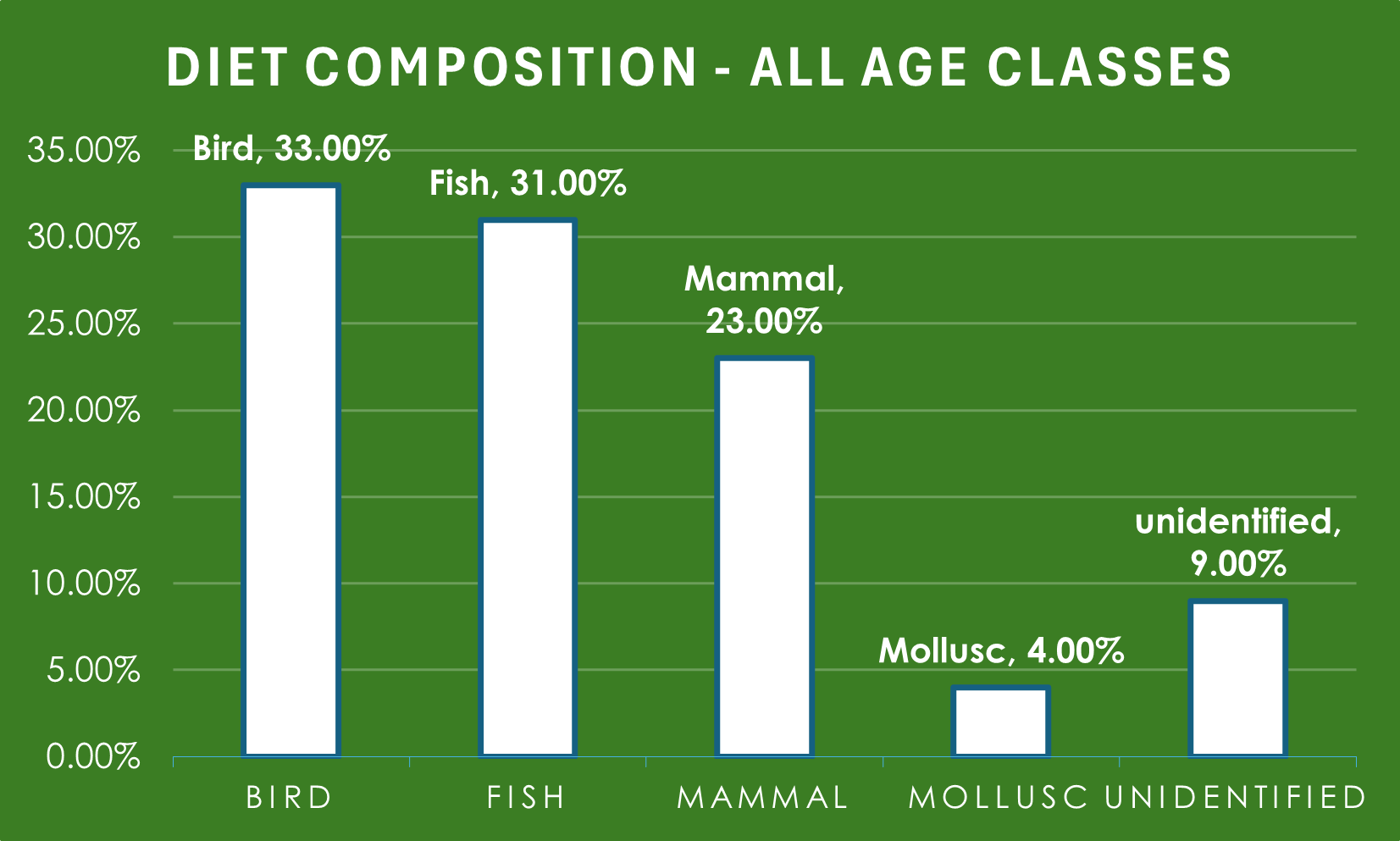
Diet composition by percentage: Bird (33%, Fish 31%, Mammal 23%, Mollusc 4%, unidentified 9%)
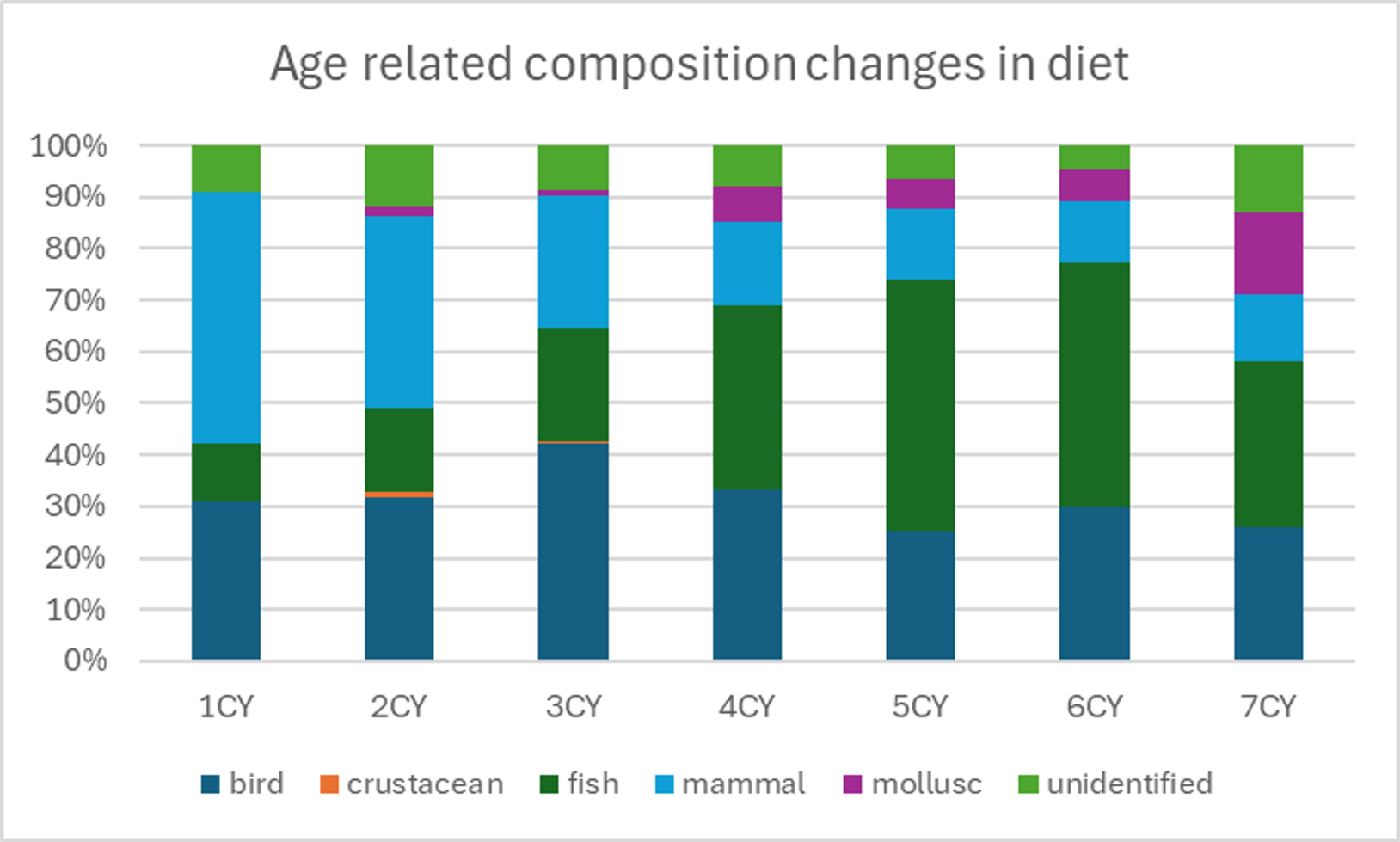
Age related composition changes in diet, showing Eagles at breeding age (4+ years) with a higher proportion of fish in the diet.
For young White-tailed Eagles, scavenging carrion is highly important, but as they gain maturity, more time is spent predating live prey. White-tailed Eagles are also occasional kleptoparasites – meaning they will steal food from other birds.
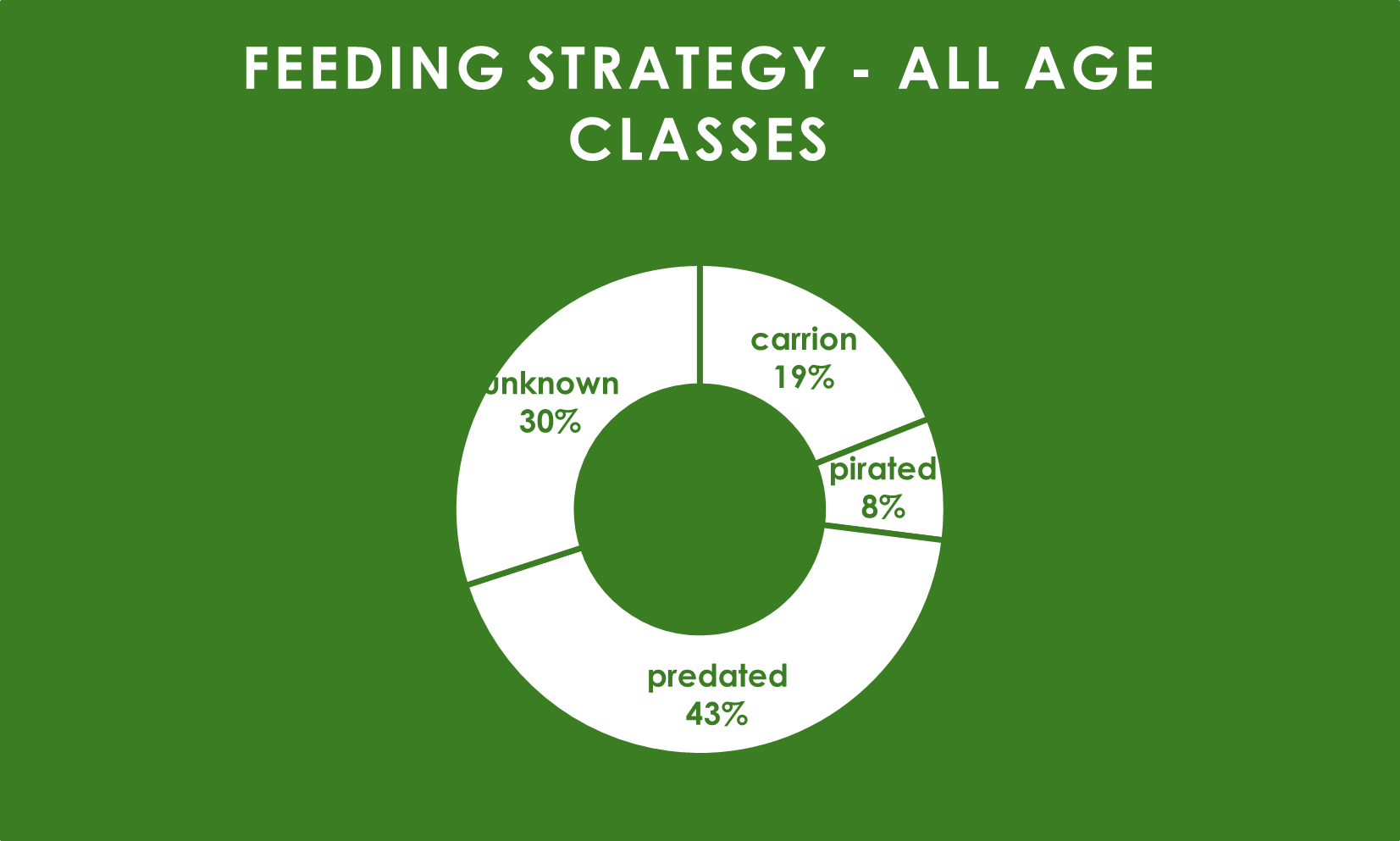
Feeding strategy for all age classes: Carrion 19%, Pirated 8%, Predated 43%, unknown 30%
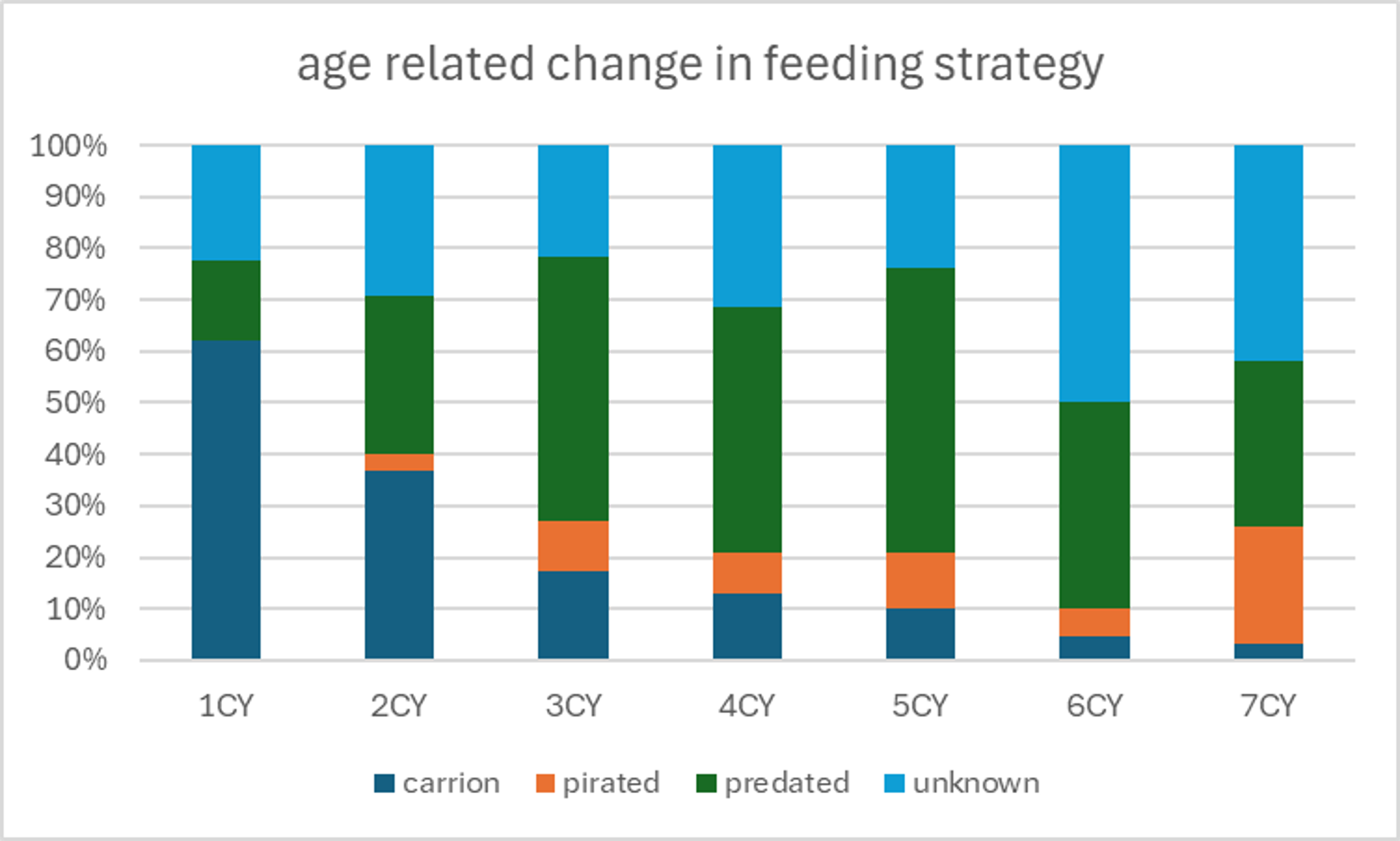
Age related composition changes in feeding strategy, demonstrating carrion as a key feeding strategy for young eagles, and predation more important as the Eagles mature.
Nest camera monitoring
Installing 4G cameras at monitored nest sites enables the project team to analyse and record every prey delivery to the nest within the nestling phase of breeding.
Establishing accurate breeding dietary composition
This full record of diet enables the team to build a clear picture of breeding season diet within Southern England. Two White-tailed Eagle nests were monitored closely by camera in 2025.
Diet during the nestling phase for eagle nest WTE001 is largely comprised of fish, whereas for the first breeding year for nest WTE002, birds were equally important as a food source. Further monitoring will continue for both of these pairs in 2026, to build on the existing data pool.
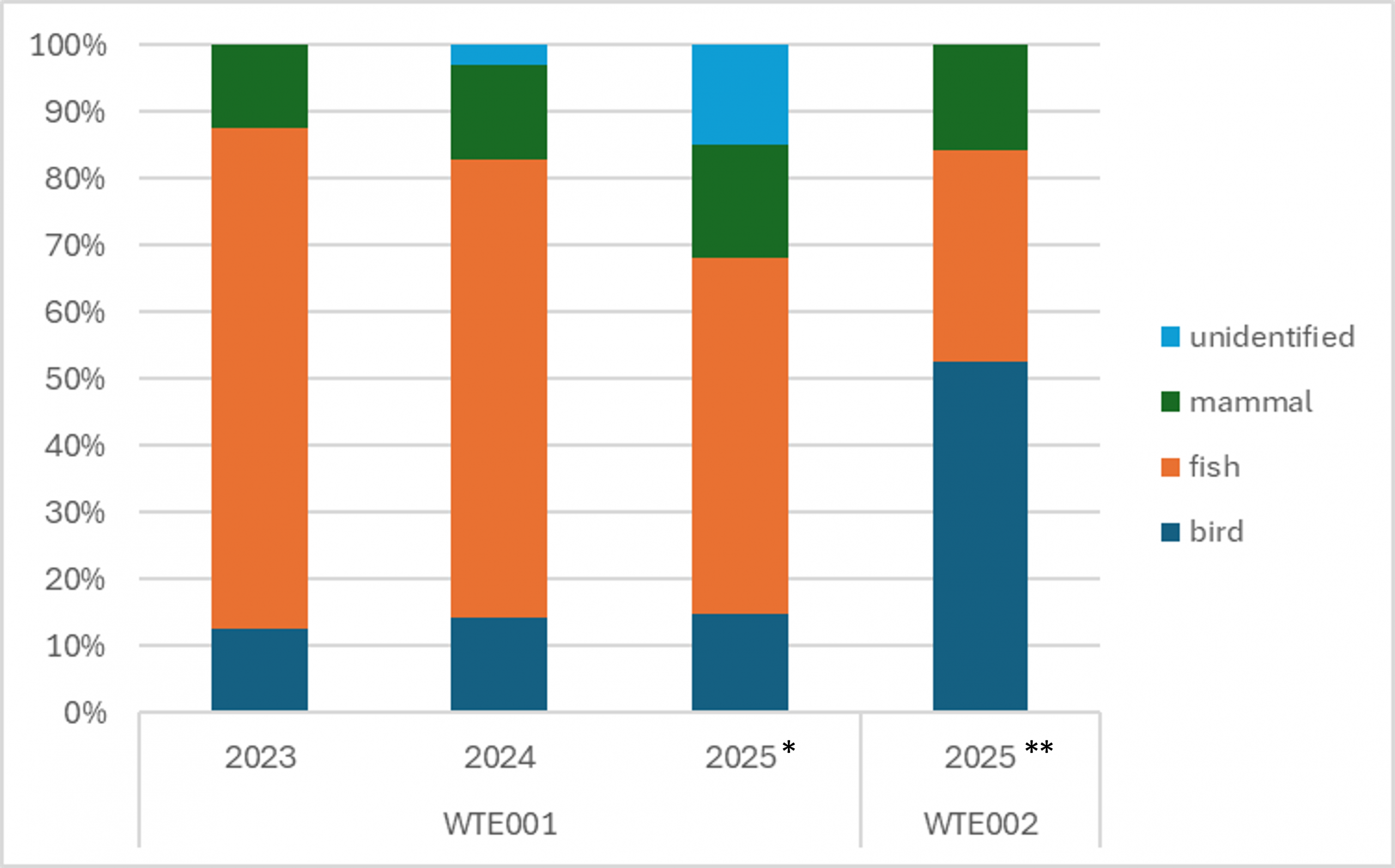
Diet composition from nest camera analysis during the nestling phase of two White-Tailed Eagle nests in Southern England. WTE002 bred for the first time in 2025.
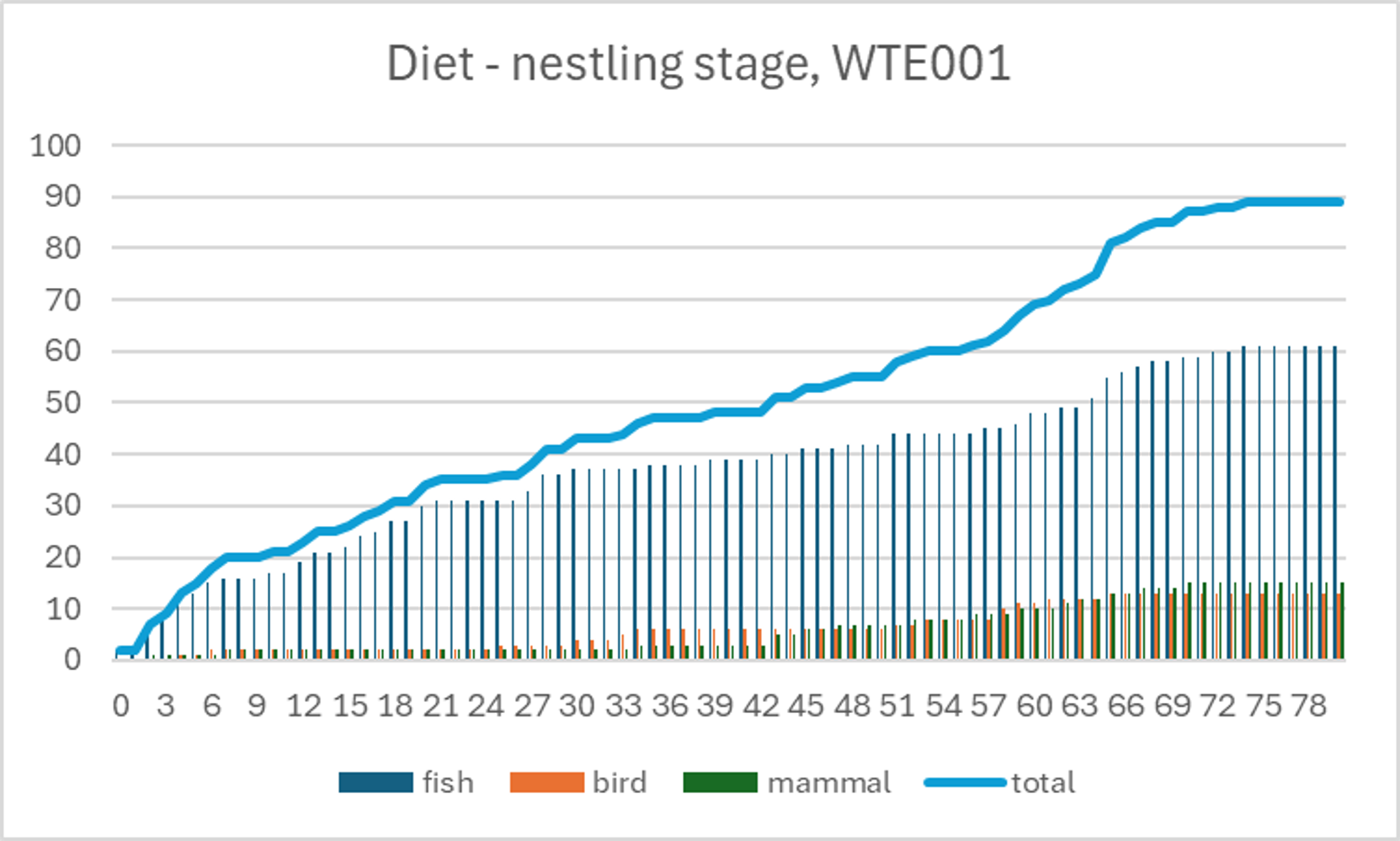
Diet composition at the nestling stage of nest WTE001 – breeding for the third time in 2025.
F.A.Q.
Frequently Asked Questions
During the public consultation concerns were raised by some that White-tailed Eagles may predate lambs or other livestock. We have been careful to listen to these concerns, to look at the scientific research around this issue, and to speak to people with direct experience. Evidence indicates that some White-tailed Eagles scavenge dead lambs in Scotland and very occasionally take small and weak individuals of blackface sheep on hill grazings. However this is predominantly due
to the open range nature of agriculture and bad weather as well as the lack of alternative wild prey in some biologically poor regions. In view of the concerns that had been raised, the project team visited the
Netherlands to speak with researchers monitoring the expanding Dutch White-tailed Eagle population. There White-tailed Eagles breed in areas grazed by sheep, but the researchers, who have kept detailed feeding
records, have recorded no cases of eagles taking lambs or any other livestock and there is no conflict with farming. There is an abundant supply of wild prey – particularly water birds and fish – in
the Netherlands and a similar scenario is likely on the Isle of Wight given the high prey availability in the Solent and surrounding areas. In Ireland, where there are now ten breeding pairs of White-tailed Eagles following a reintroduction project, there have been no cases of eagle predation on lambs and most farmers are either neutral or supportive of the project, despite initial concerns. A key responsibility of the project officer’s role is to liaise closely with the farming community from the outset, and respond to any local issues immediately should they occur. Representatives from the farming community, as well as other key local stakeholders – are members of the project’s steering group.
As a generalist predator, White-tailed Eagles tend to favour the most seasonally abundant prey. This means that in spring and summer fish, rather than birds, are likely to form the key part of the diet. Furthermore evidence from other parts of Europe, such as the Danube Delta, where there are 20-25 breeding pairs, indicates that White-tailed Eagles have no impact on ground-nesting birds. Wildfowl are taken in preference to waders, as demonstrated by the fact that the eight most commonly caught bird species taken in the Danube Delta were ducks and geese, with Coot the most commonly taken species, followed by Mallard. The same is true in the Netherlands where wildfowl are the favoured
prey with goslings of Greylag and Canada Geese forming a key part of the diet in summer, along with Coot. Sea eagles tend to take injured and weak individuals.
Evidence from Scotland demonstrates that White-tailed Eagles pose no threat to Red Squirrels. They are not agile enough to catch Red Squirrels in wooded areas, and instead favour wide open spaces for hunting. In Scotland where White-tailed Eagles nest in forests with healthy populations of Red Squirrels there has been no evidence of them being brought to nests as prey despite extensive monitoring by volunteers and using camera traps. For example at one site monitored by Forestry
Commission Scotland many hundreds of hours of observations, over several years, were made by volunteers of a pair of White-tailed Eagles nesting in an east coast pine wood with a large population of Red Squirrels. They did not observe Red Squirrel being brought to the nest as a prey item. Likewise Red Squirrel did not feature as a prey item at another site where over 7000 camera-trap photos were taken at a White-tailed Eagle nest located in a forest with Red Squirrels.
It is possible, in fact, that there may be indirect benefits to the islands Red Squirrels, if White-tailed Eagles were to predate Buzzards.
The White-tailed Eagles preference for foraging along coastal waters and inland lakes means that they are unlikely to come into contact with gamebirds, but may occasionally scavenge dead pheasants lying in open surroundings.
White-tailed Eagles are likely to have minimal impact on fish stocks. They are likely to take the majority of their fish in shallow estuarine water, and will favour seasonally abundant species such as Grey Mullet. Furthermore their ability to exploit other prey such as birds and mammals means that fish populations will not be under threat.