WHITE-TAILED EAGLE REINTRODUCTION TO SOUTHERN ENGLAND
Latest news: Three eagles disappear in suspicious circumstances
We are deeply concerned that three Eagles monitored as part of the Project have disappeared in suspicious circumstances.
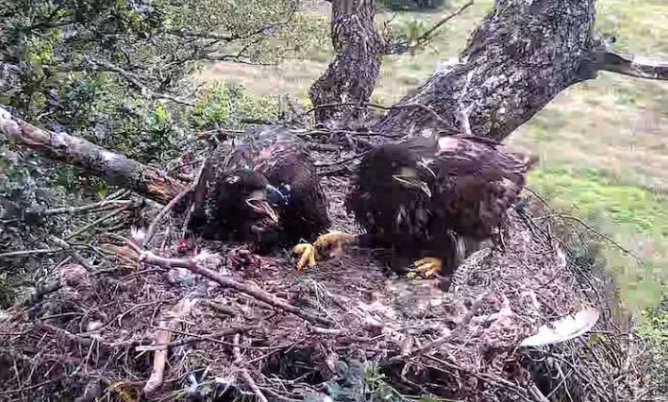
The recovery of White-tailed Eagles in the UK
We are strong advocates that White-tailed Eagles should be restored to all areas where they used to occur in the UK, as well as in southern and western Europe. We are currently working in partnership with Forestry England to release White-tailed Eagles on the Isle of Wight.
Roy Dennis has also given advice to White-tailed Eagle reintroduction projects that have been proposed in Spain, Gibraltar and France.
The history of White-tailed Eagles in the UK
The White-tailed Eagle was formerly widespread across the whole of the United Kingdom before suffering intense persecution beginning in the Middle Ages, which led to a drastic decline. By the late eighteenth century only a few isolated breeding pairs persisted in England, with the last known pair in the south breeding on Culver Cliff on the Isle of Wight in 1780. The last breeding pair in England was thought to be on the Isle of Man in 1815 while in Scotland the species was lost in the early twentieth century, with the last known pair breeding for a final time in 1916.
Concerted efforts to restore the White-tailed Eagle to Scotland began in the middle part of the twentieth century. Early releases were undertaken in 1959 and 1968, and although they failed, the 1968 release in particular – which was undertaken by Roy Dennis on Fair Isle – was a valuable test of translocation, husbandry and release methods. A total of 75 Norwegian young were subsequently released on Rum National Nature Reserve between 1975 and 1985, and this led to the first successful breeding in 1985. The population was relatively slow to expand and so an additional 56 birds were released between 1993 and 1998 using improved techniques. By 2000 there were 22 breeding pairs and the 100th chick fledged successfully.
Since then the population in Scotland, predominantly in western parts, has expanded to more than 130 breeding pairs. Following the successes in the west, 85 juvenile White-tailed Eagles were released on the east coast between 2007 and 2012, with birds again imported from Norway. The first pair in eastern Scotland subsequently bred successfully in 2013. Meanwhile in Ireland a total of 100 chicks were translocated to Killarney National Park between 2007 and 2012. There are now at least ten breeding pairs.
Image: Jacqui Leeming
Successful projects so far…
Scotland
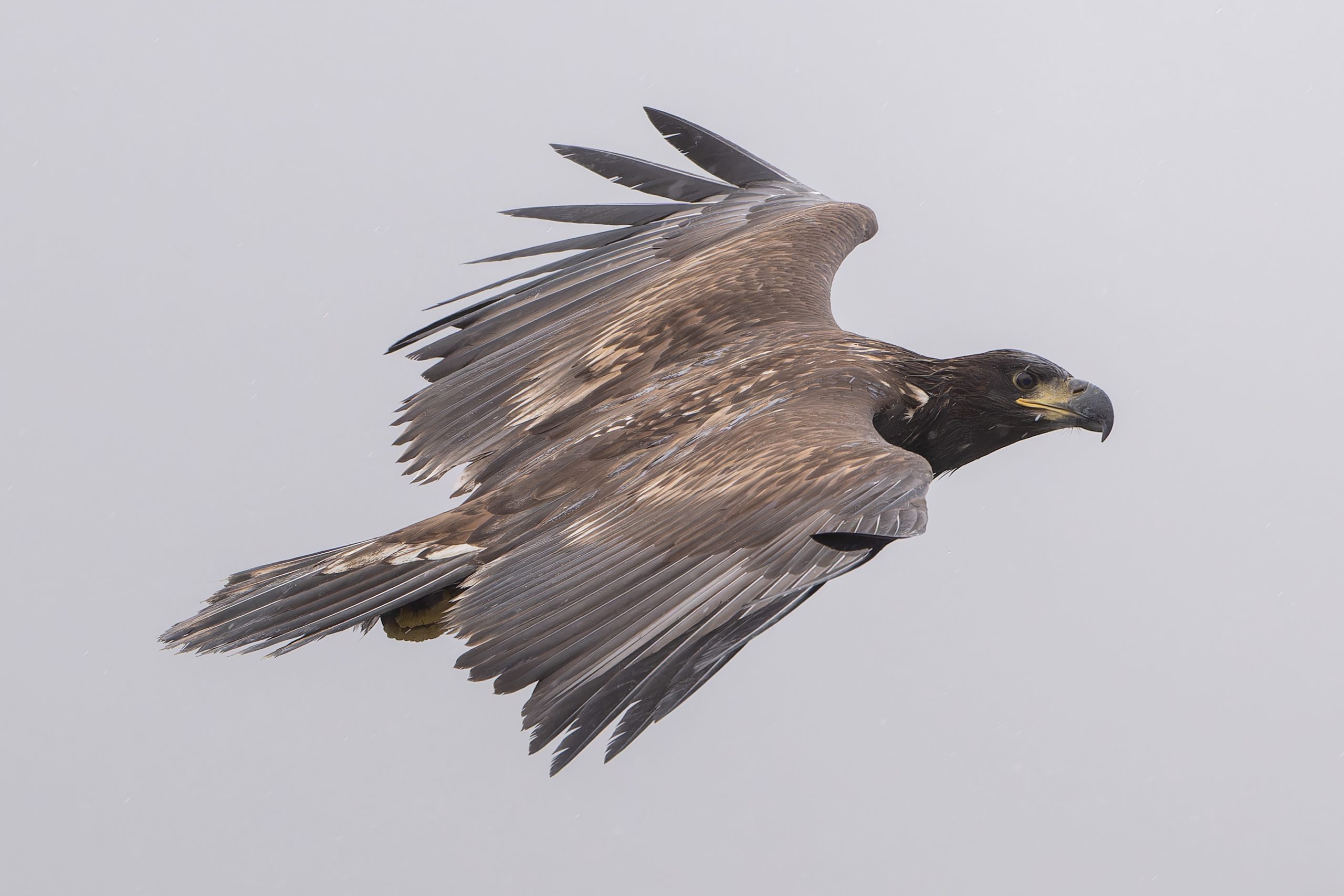
A full-scale reintroduction was started by the Nature Conservancy (now Scottish Natural Heritage) in 1975 on the island of Rum, where sea eagles had last bred in 1907. Over the next ten years 82
eaglets (39 males and and 43 females) were translocated from Norway. The first successful breeding occurred in in 1985 on Mull. Further releases were carried out and now a successful and viable population continues to breed.
Image: Mike Crutch
Ireland
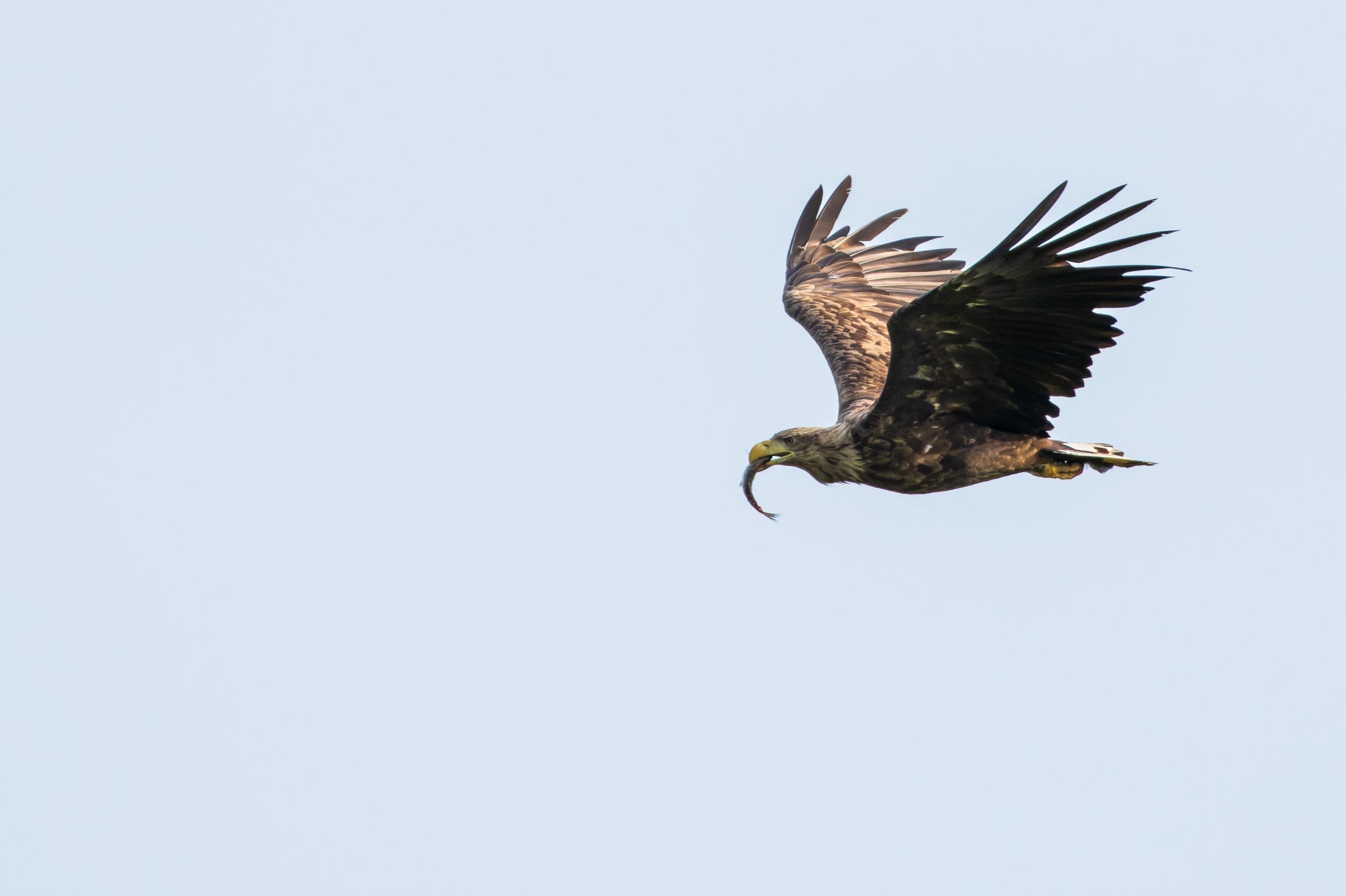
15 young Eagles from Norway were released in 2007 and 2020 in Kerry National Park directed by Project Manager Dr Alan Mee.
Image: Jacqui Leeming
Isle of Wight
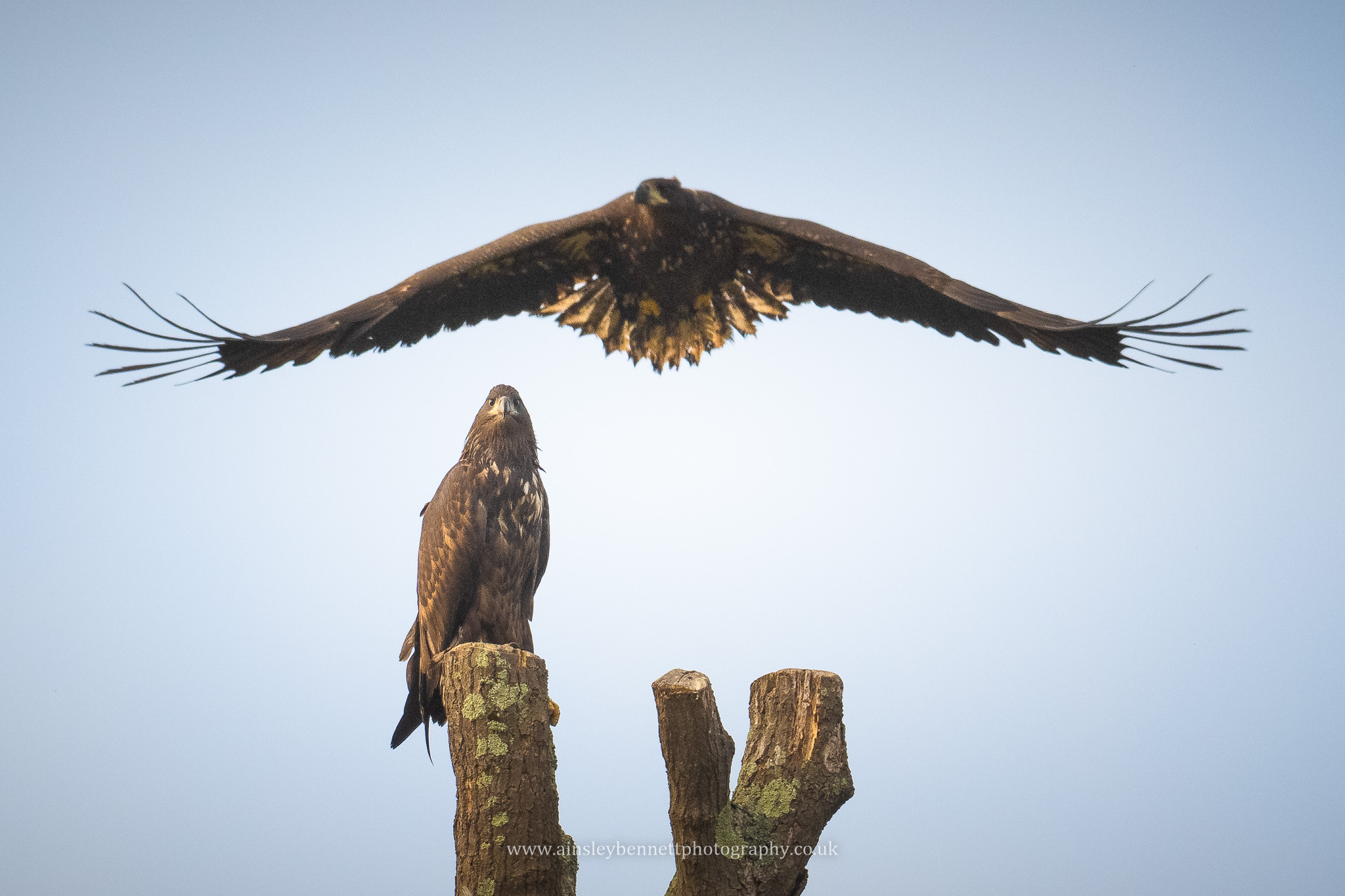
The project aims to restore a population of White-tailed Eagles to the South Coast of England. This will involve the release of young White-tailed Eagles from Scotland at a confidential site on the Isle of Wight. The released birds will regard the area as home, and remain to breed in future years. The first six birds were released in August
2019, and to date 45 birds have been released and in 2025 two pairs bred successfully in Southern England.
Image: Ainsley Bennet
About the White-tailed Eagle
The White-tailed Eagle or sea eagle is the UK’s largest bird of prey, with a huge wing span of up to 2.5 metres. The wings are very broad and appear more rectangular than those of a golden eagle. They have fingered tips. As the name suggests, they have a white tail, ridged with black in juveniles. The short tail has a distinctive wedge shape. The head and neck are pale, almost white in mature birds, although juveniles are dark brown, and do not attain full adult plumage until 4-5 years of age. They have a hooked yellow beak, much more prominent than that of a golden eagle, and piercing golden eyes. The legs and talons are yellow.
Habitat and distribution
White-tailed eagles are found along rocky coastlines, estuaries and lochs near the sea, although they will also range inland, especially juveniles. The species is very widely distributed, with strongholds in Russia and Norway. It has been reintroduced to the UK, after being driven to extinction, and is now found in Scotland and Ireland. In Scotland the best places to see White-tailed Eagles are Mull, Skye and parts of the northwest Highlands.
DIET
White-tailed Eagles eat a variety of prey. As their other common name, sea eagle, suggests, they take fish, but also birds, mammals and carrion. They are opportunistic hunters and often steal food
from other birds. Their method of fishing is very different to that of the osprey; flying low over the water before briefly hovering and snatching the fish, whereas ospreys will hover from a great height and then drop quickly down to the water. White-tailed Eagles will also sometimes plunge right into the water.
Reproduction
White-tailed Eagles reach sexual maturity at 5-6 years of age. Eyries are built in the top of mature trees, made from sticks. They are often added to each year and so can become huge structures, more than 2 metres wide and deep. 1-3 eggs are laid in late March-early April and incubated for 38 to 40 days, predominantly by the female. For the first three weeks after hatching the male does all of the hunting, and after that time the female will take turns to hunt. The young fledge after 70 days and remain reliant on their parents for a further 5-6 weeks. Young White-tailed Eagles often roam widely in their first few years of life, before finding a breeding territory and mate. They can live to over 20 years of age.
Status and threats
White-tailed Eagles are classified by the IUCN as ‘Least Concern’. The species was persecuted to extinction and suffered huge losses in the 1950s and 1960s due to organochlorine pesticides such as DDT, which caused egg shell thinning. White tailed eagles are strictly protected under Schedules 1, 1A and A1 of the Wildlife and Countryside Act 1981 and The Nature Conservation (Scotland) Act 2004. They are included on the Red List of UK birds of conservation concern. Internationally, they are listed on CITES Appendix I and II and CMS Appendix I and II.