
tHE osprey recolonisation of england
Latest news: Osprey hatched from Poole Harbour breeds in England for the first time
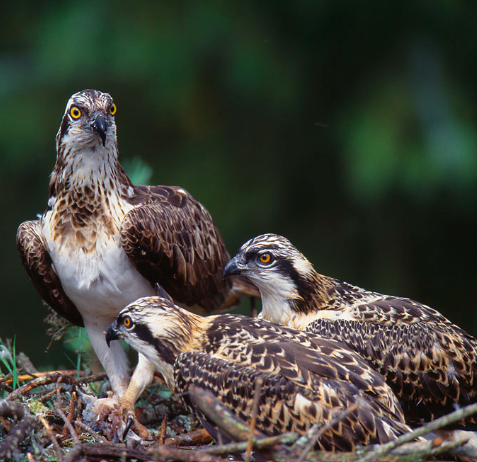
5H1 hatched in 2022 from her parents CJ7 and 022, the Poole Harbour Osprey pair. She was the first chick to hatch in Southern England since 1847, and in 2025 she paired up with a male, 3AY, who hatched from the Rutland Water project in 2019. They successfully reared 3 chicks!
The recovery of Osprey in Britain
British ospreys were severely persecuted from the Middle Ages and this led to a huge decline. By the end of the 18th century it was considered a rare bird, despite having previously nested throughout the British Isles. Persecution continued throughout the 1900s as well as a new threat from egg collectors. By the end of the 19th century there were just a few pairs remaining.
The Scottish population recovered due to the work of Roy Dennis and other conservationists from the 1960s onward. The Foundation translocated Ospreys from Scotland to be released at Rutland Water in 1996 and to Poole Harbour in 2019, increasing the rate of recovery of the English population. We are continuing to monitor English Ospreys and support further colonisation of their former range through nest site installation.
Dr Roy Dennis OBE and Dr Tim Mackrill have also advised Osprey projects in Spain, Italy and Portugal.
Fieldwork
We monitor Osprey behaviour from April through to October when they may be present in the UK for breeding. We check all known nest sites in key areas several times a season and, as well as ringing chicks, we collect data on breeding pairs, clutch sizes and numbers of chicks, to build up records on reproductive success.
To aid natural colonisation we are building Osprey nests in key potential breeding habitat within the species former range, and mapping known Osprey nest sites across the UK. To report an active Osprey nest site to be included in our national mapping project, please contact info@roydennis.org.
Colour ringing
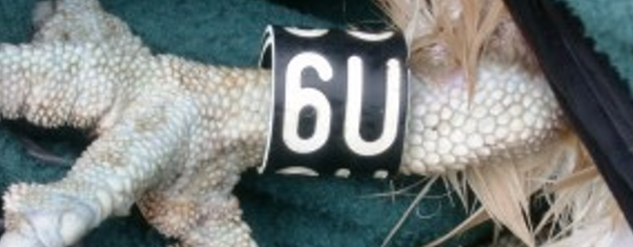
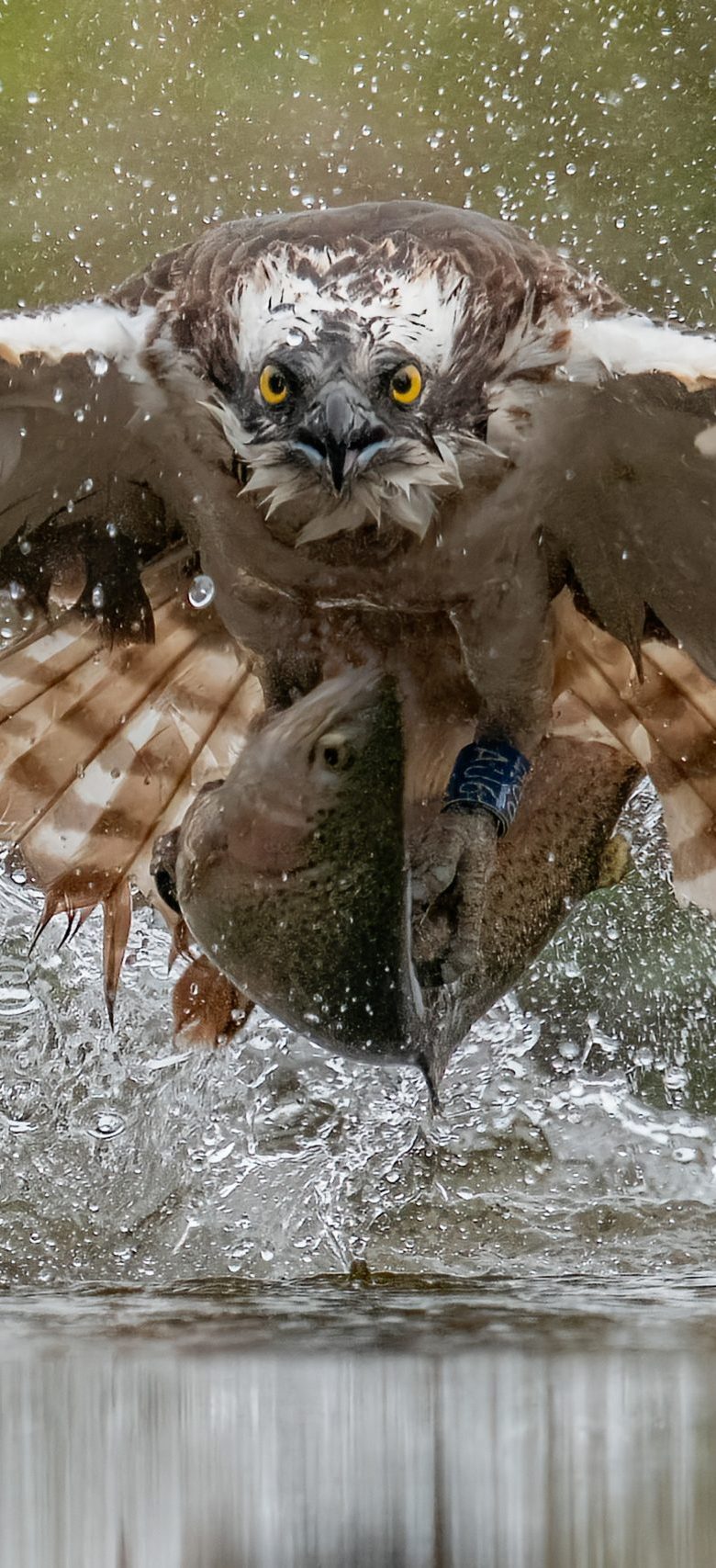
We have been managing the colour ringing of Ospreys in Scotland since 1996, and now do so for England as well. When ringing young Ospreys we fit a British Trust for Ornithology metal ring, and a colour ring. The metal ring is numbered so that finders can send finding details to the BTO as part of the national bird ringing scheme. The colour ring is unique and allows individual birds to be identified in the field. If you are able to identify the code on a colour ringed Osprey, please report your sighting to us here quoting the colour and the code (e.g. blue 3AY)
Ongoing Osprey projects
Scotland
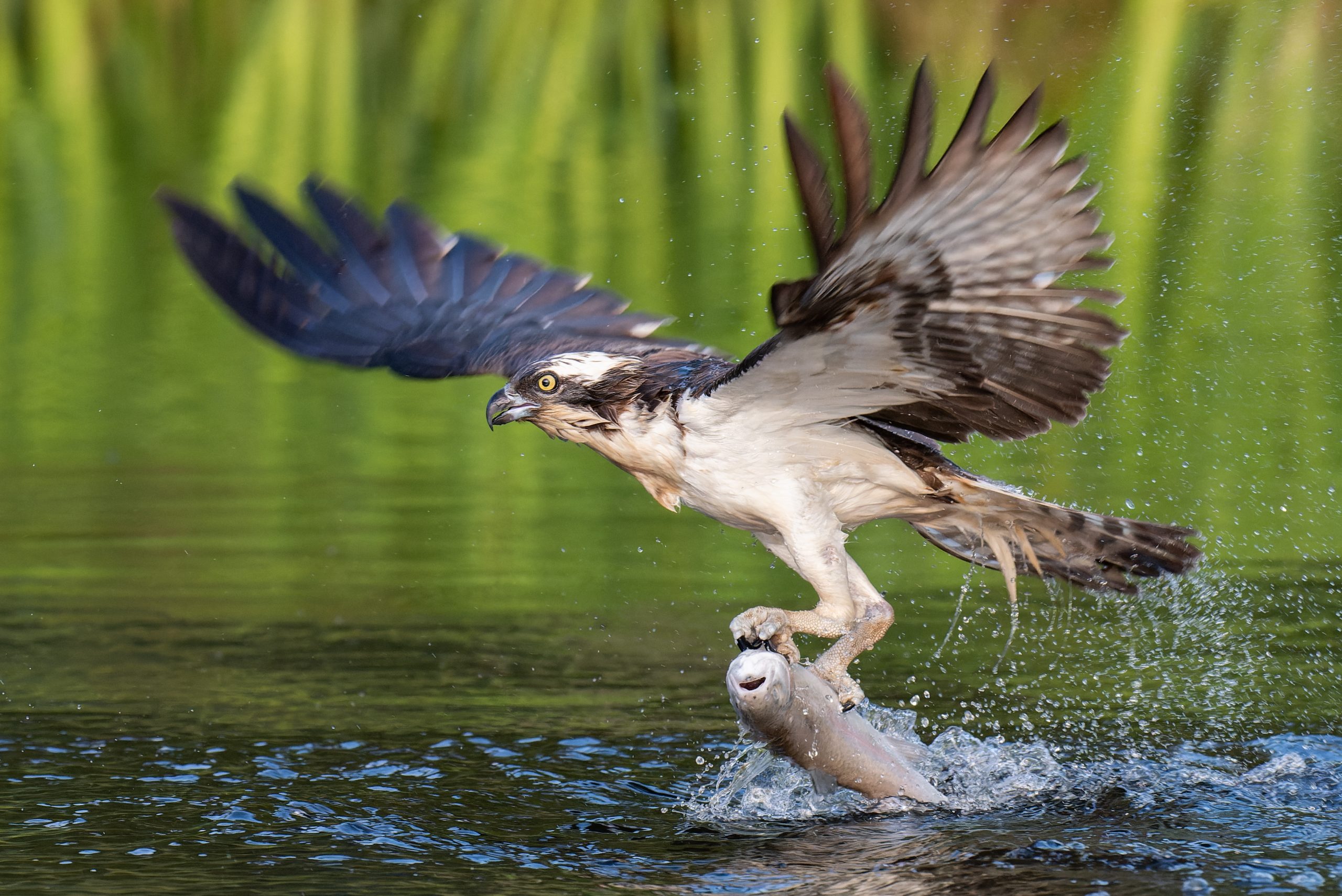
The population of Osprey in Scotland is now comprised of well over 200 successful breeding pairs. Ongoing monitoring and protection ensures the population continues to thrive.
Image: Mike Crutch
Rutland Water
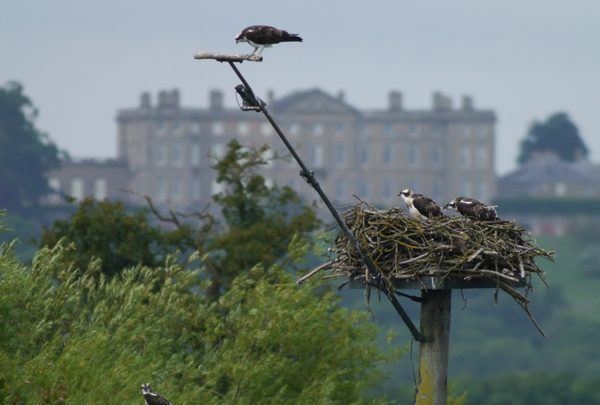
Ospreys were translocated from Scotland to Rutland Water in 1996, and there is now a successful breeding population with 278 chicks fledged from Rutland Water since the translocation. Work continues to monitor the Ospreys as well as protecting and maintaining their nests.
Image: John Wright
Poole Harbour
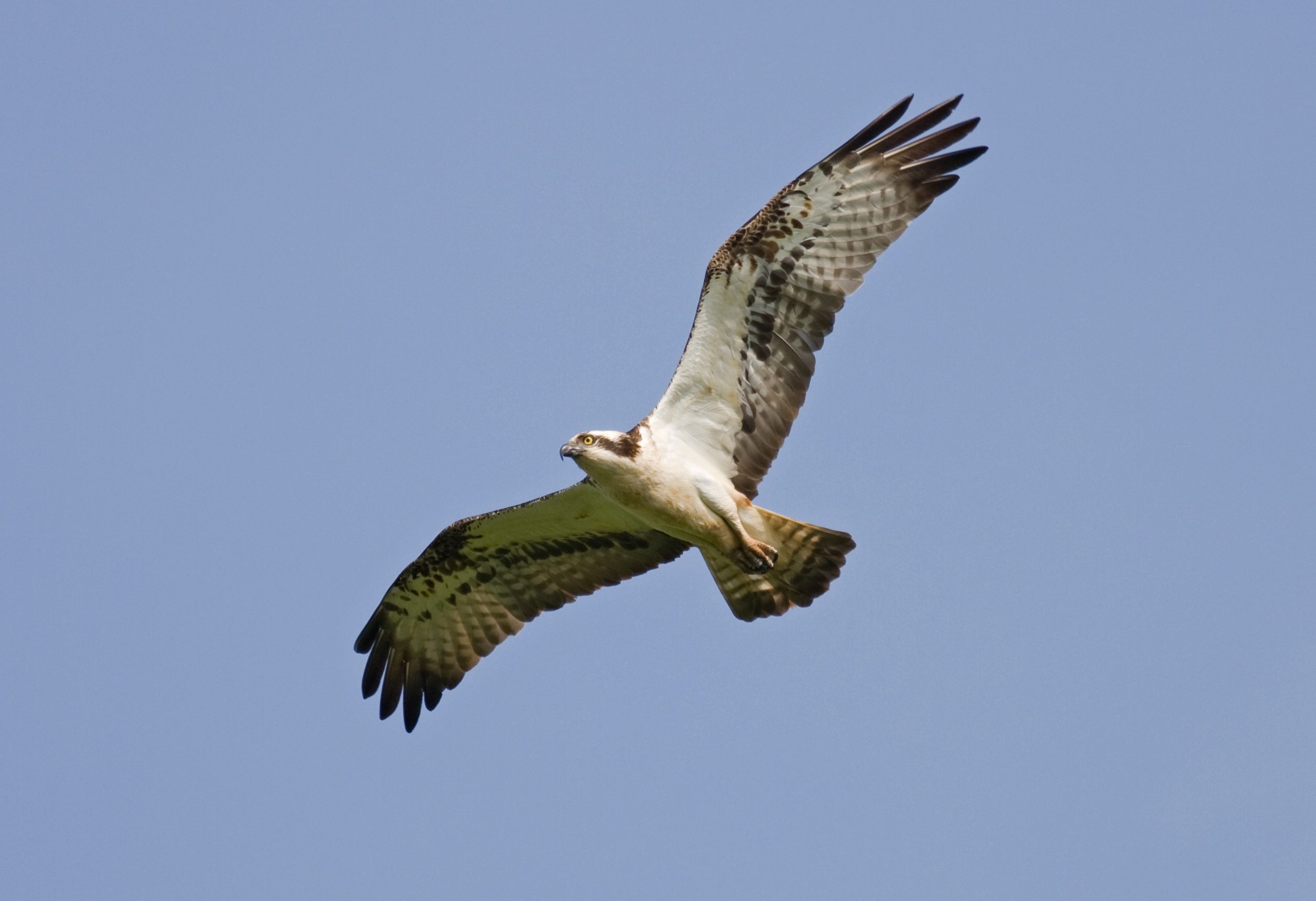
Osprey chicks were translocated from Scotland and released in Poole Harbour in a multi-year project that started in 2019. In 2025 the first Poole Harbour hatched chick bred with a male from Rutland Water and raised three chicks.
Image: John Wright
Portugal
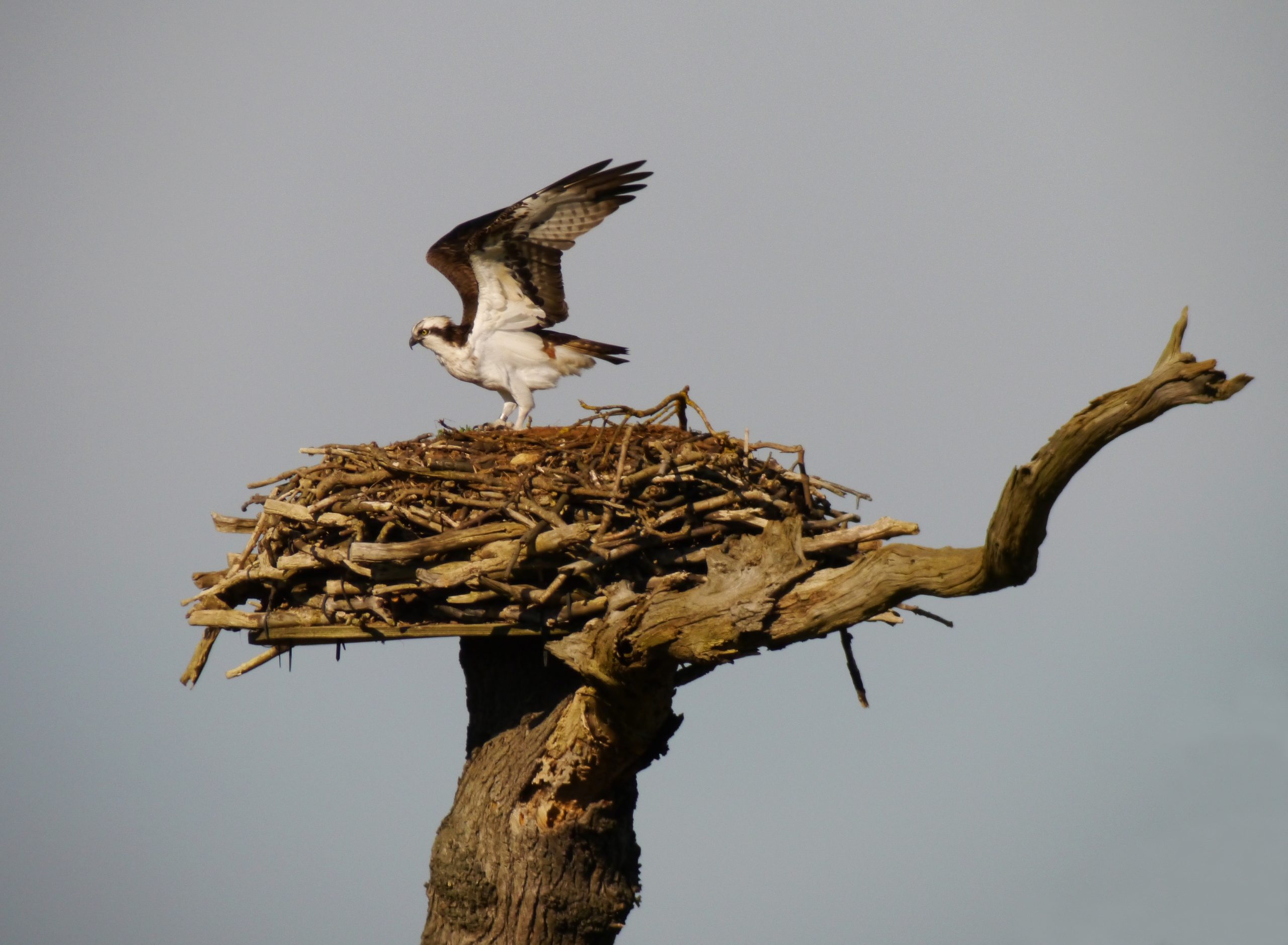
There used to be a population of breeding ospreys along the coast of Portugal, but in the last century numbers declined drastically, due to shooting and disturbance, leaving just one pair. In 2011 Roy Dennis worked with and advised Portugese ornithologists on a translocation of Osprey from Scandinavia. The release went ahead successfully in 2012.
Image: John Wright
Italy
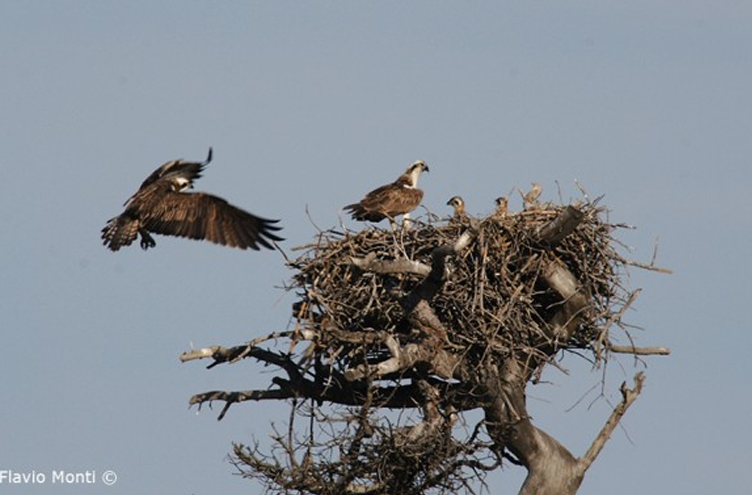
Roy Dennis began advising an Osprey translocation and release from Corsica to Italy in 2004. The releases took place successfully from 2006 to 2007, and in 2011 the first pair of Ospreys bred in Tuscany, where there is now a successful population.
Image: Flavio monti
Spain
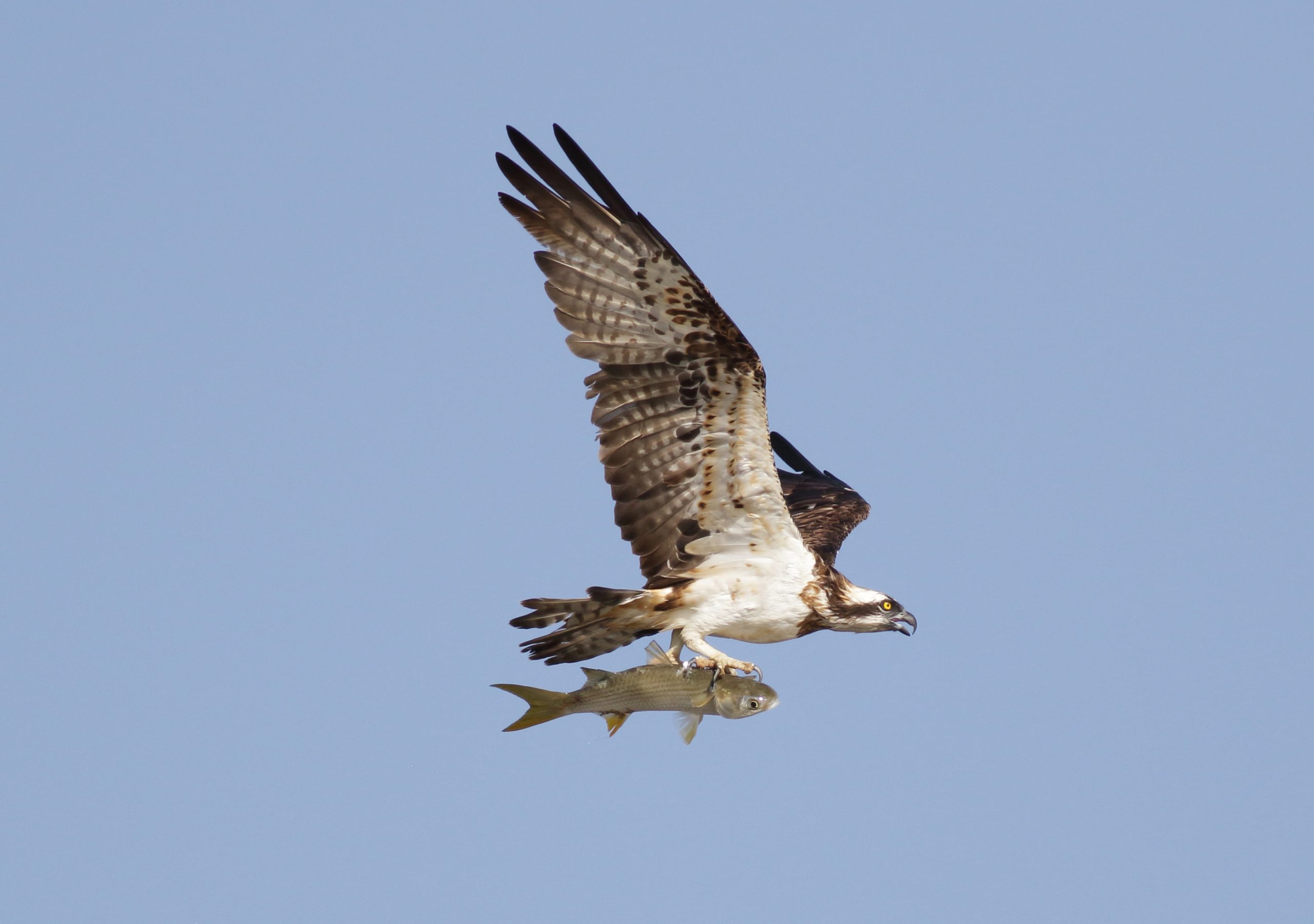
Roy Dennis began working with Spanish ornithologists to translocate Ospreys shortly after the Rutland Water project. In July 2003 the first four ospreys from Finland were released at the site and the following summer young ospreys from Scotland and Germany were released there. More have
been released each summer since, with the majority collected in northern Germany. The Foundation organised the licence arrangements and collection of suitable young in Scotland and transportation
to Spain. Osprey started to breed in 2005, and are now successful each year.
Image: John Wright
The History of Osprey in the UK
The last recorded nesting pair in the UK was at Loch Loyne, Scotland in 1916 but individual birds and reports of pairs indicated that the species held on with occasional breeding as well as incomers from Scandinavia, lost on migration. Loch Garten was almost certainly used by breeding ospreys in the 1930s and 1940s, but the new era of ospreys in Scotland started with successful breeding at Loch Garten in 1954 and the establishment of the RSPB’s world famous osprey visitor in 1959.
By 1966 the Scottish population had risen to three pairs and in 1967 young were reared for the first
time in the county of Moray, where we are based. Despite these small successes the rate of
colonisation was very slow. For the population to increase, ospreys need to produce enough young
to return to breed over and above the natural losses that occur during the birds’ early years in Africa
and on migration. It was not until the late 1960s that the population started to rise. By 1974 there
were 14 pairs, across Moray, Strathspey, Sutherland and Perthshire, monitored and protected by Roy
Dennis, while he was the RSPB’s Highland Officer. However, the rate of increase was hampered by
egg thefts; 1977 saw the first clutch of four eggs but sadly it was stolen by egg collectors. By 1980
there were 26 breeding pairs, 20 of which had laid eggs rearing a total of 41 young, bringing the total number of young reared to a marvellous 250.
The population in Scotland steadily increased through the 1980s and 1992 saw a milestone of 101 young reared in a year: the first time 100 young ospreys had flown the nest in a year in Britain for probably more than two centuries. Thankfully the rate of egg theft dramatically decreased as well. The population was at 147 pairs by the end of the decade, and able to supply young for the Rutland Water translocation in 1996, and again for Poole Harbour from 2019. In the early 2000s Ospreys began to naturally colonise parts of Wales, and the Scottish population is now well over 200 pairs.
Image: Mike Crutch
About the Osprey
Ospreys are relatively large, growing to 55-62cm in length, with exceptionally long wings that extend to a span of 145-180cm. The wings are often held in a characteristic ‘W’ shape, making the bird unmistakeable in flight. When compared with other birds of prey in Britain, it appears larger than a buzzard but obviously smaller than a golden eagle. They are dark brown above and white below, and in Britain can sometimes be confused with some of our larger gulls. The breast has a variable brown band, more pronounced in females than males. The head is white with a dark brown band across the eyes. The eyes are yellow, although orange in young ospreys. They weigh 1.2-2kg and males are 5-10% smaller than females..
habitat and distribution
Ospreys inhabit a vast array of habitats, including marine, freshwater and brackish. The main requirement is a good supply of medium-sized fish which can be caught from the surface of the water. They are very widely distributed and are found on all five continents. There are thought to be 40-50,000 pairs worldwide.
Diet
The osprey’s diet consists solely of fish. The outer toe of their talons is reversible, meaning that prey
can be gripped firmly between two talons in front and two behind, and the strong black bill is curved into a hook for tearing up fish. On arrival at a fishing site, an osprey will circle the water, usually at a height of 100ft or more. It flies steadily above the surface, with the head swivelling and looking intently at the water. If satisfied, it
closes its wings and carries out a most spectacular plunge into the water, at the last moment
throwing its outstretched talons directly in front of its head to grab the fish. Experienced ospreys are
successful in one out of every four dives. Ospreys eat any available species of fish but prefer those in the 150-300g weight range. An osprey needs to consume 300-400g of fish per day. They fish in all types of environments, including lakes, rivers, estuaries and coastal waters.
Reproduction
Ospreys are a migratory species, with British ospreys spending the breeding season (March
September) in the UK, then migrating to Africa for the winter. Breeding pairs do not spend the winter together, but meet up once back at the nest site. Ospreys generally build nests at the top of
prominent trees, normally conifers, and as they tend to be added to every year, can become quite large. The female lays a clutch of 2-4 eggs, normally 3. Eggs are incubated for 35-37 days, predominantly by the female, with the male hunting for the both of them. Once the chicks hatch the female only leaves the nest for very short periods of time, and the male catches fish for the whole family. The chicks grow quickly and fledge after 51-56 days. About 3 weeks later the female departs for Africa and the male continues to feed the chicks for a further 1-2 weeks. The rest of the family then follow suit, all departing within a few days of each other. The adults return to their breeding quarters the following spring, but juveniles remain in Africa for a year and don’t return to the UK until
the spring of their second year.
Status and threats
Globally, the species is listed by the World Conservation Union (IUCN) as ‘Least Concern’. Within
Britain they are doing well but remain absent from many of their historic territories. They have
difficulty breeding in new areas and are slow to recolonise places where they once thrived, with
approximately 60% of adults dying before breeding. Sadly, ospreys are still persecuted and this remains one of the major threats to their survival. Collision with overhead power lines and
entanglement in fishing nets are also big dangers. Within the UK ospreys are strictly protected under Schedule 1 of the Wildlife and Countryside Act
1981 and The Nature Conservation (Scotland) Act 2004. They are also included on the Amber List
of conservation concern.